
REVIEW · HISTORICAL TOURS
Heritage Pass in Malta
Three days, one Malta heritage ticket. This pass ties together 20+ attractions across Valletta and the island, with unlimited hop-on hop-off buses plus two cruises that include free Wi-Fi. I like that it helps you avoid ticket-line time at the biggest draws, and I like how it mixes forts, museums, and megalithic temples so you feel like you saw the whole country. The main drawback is that you still need to respect opening times, since some sites can be closed on specific days.
If you want a simple way to get your bearings fast and keep moving without a day-by-day debate, this is a strong option. It also helps if you are not staying right in Valletta, because the bus and cruise add real structure, even if you end up doing a bit of walking between stops.
In This Review
- Key things to know before you go
- Price and value: when this pass is a smart buy
- A simple Malta plan: use the bus and cruises to build your days
- Valletta by fort, palace, and museum: Fort St Elmo to the Presidential Palace
- MUŻA: Malta’s art museum in a historic Auberge
- State Rooms at the Presidential Palace: power, then paper
- Palace Armoury: knights in metal and Ottoman contrasts
- Domvs Romana: Roman life, shown through mosaics
- The Grand Harbour cruise plus Birgu forts: Fort St Angelo and the Maritime Museum
- Fort St Angelo: headquarters energy at the center of the harbor
- Malta Maritime Museum: from prehistory to modern sailing
- Mdina’s natural history, underground Christianity, and a Roman reality check
- National Museum of Natural History: Maltese ecosystems, plants, and birds
- St Paul’s Catacombs: early Christianity in a built underground system
- Museum stops that add context to your timeline
- South coast megalith circuit: Ħaġar Qim and Mnajdra timing tips
- Ħaġar Qim: the ridge-temple feeling
- Mnajdra: ancient mastery under protective cover
- Prehistory around Malta: Ta’ Ħaġrat, Skorba, Borġ in-Nadur, and Hal Tarxien
- Ta’ Ħaġrat: UNESCO megaliths among the oldest
- Skorba: early Neolithic clues
- Borġ in-Nadur: temple plus Bronze Age village and fortification
- Hal Tarxien: three attached temples and decorated slabs
- Ġgantija-age to real remains: Ghar Dalam Cave and Museum
- How to use the pass smoothly: QR codes, closures, and bus-stop sanity
- Scan the QR code for opening times
- Have a backup plan for inside sites
- Use the same boarding point for the bus when possible
- Ask for help on the ground when your plan feels fuzzy
- What this pass is best for (and what it is not)
- Should you book the Heritage Pass in Malta?
- FAQ
- What is included in the Heritage Pass for Malta?
- Where does this experience start?
- How long is the pass valid for?
- How much does the pass cost?
- How far in advance do people typically book?
- What are the opening hours for the included attractions?
- Do I need to buy separate tickets at each site?
- Is Wi-Fi available during the cruises?
- What should I do before I go to a specific site?
- What happens if a site is closed?
- Does weather affect the experience?
Key things to know before you go
- 20+ heritage sites are included, including Fort St Elmo, St Paul’s Catacombs, and Ħaġar Qim and Mnajdra
- Unlimited hop-on hop-off bus use helps you string Valletta sights together in a logical route
- Two cruise options are included, and both cruises offer free Wi-Fi on board
- A coastal route gives you an easy way to plan time toward Comino and Gozo
- Most entry times run through the day, with many sites open 8:00 AM to 6:00 PM (check your pass instructions for exact opening info)
- Your best strategy is to build a short list per day, then use the bus and cruises to hop between zones
Price and value: when this pass is a smart buy
At $92.69 per person, the Heritage Pass is priced for people who plan to do a lot in a short window. The value comes from the bundle: you are not just buying one big-ticket attraction. You are getting admission-style access to a long list of sites, plus transport on the hop-on hop-off bus and scenic time on harbor and coastal cruises.
Here is the practical way to judge if it makes sense for you. If you are the type who will hit 10 or more included stops over a couple of days, you will almost certainly feel like you got your money’s worth. If you only want two or three highlights, you may feel the pinch, because the pass shines when you use it hard.
One more value tip: the pass can save time even when entries themselves are simple. Avoiding ticket-line friction at major attractions matters in Valletta, where you can lose a lot of the day to walking and queues if you do not have a plan.
More Historical Tours in Valletta
- Valletta: Self-Guided Historical Walking Tour (Audio Guide)
★ 3.7 · 251 reviews - Valletta: Discover Malta’s History with a 3-in-1 Museum Pass
★ 4.6 · 13 reviews - Hagar Qim temple (UNESCO) and Limestone Heritage guided tour
★ 3.5 · 11 reviews
A simple Malta plan: use the bus and cruises to build your days
Malta is small, but it is not flat in how you experience it. The Valletta area and Grand Harbour forts feel one way. The megalith temples on the south coast feel totally different. Then you have Mdina and Rabat, where the pace slows and the geology and underground sites make Malta feel older than you expect.
This is where the pass earns its keep. You get:
- Unlimited hop-on hop-off bus use inside the areas it serves
- A harbor cruise around Valletta and the Three Cities
- A coastal pass route that points you toward Comino and Gozo
- Free Wi-Fi on both cruises, which is handy if you are juggling maps, photos, and QR codes
One real-world tip I would follow: when you use the bus, pay attention to which stop you are getting on at. People have had trouble finding the right boarding point, especially around the Valletta waterfront. If you get off at one place, try to return to that same stop area to board next time, rather than guessing.
Valletta by fort, palace, and museum: Fort St Elmo to the Presidential Palace
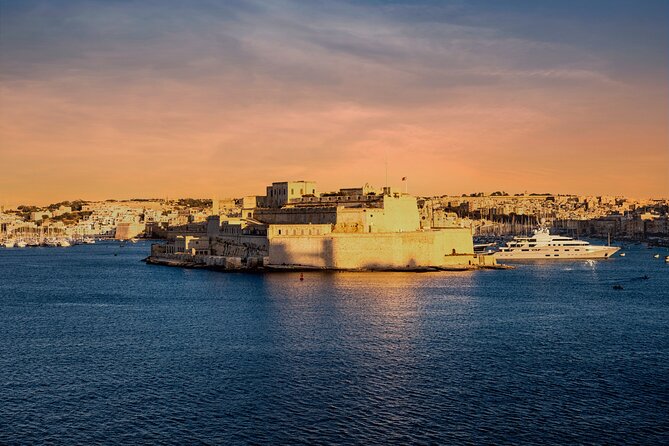
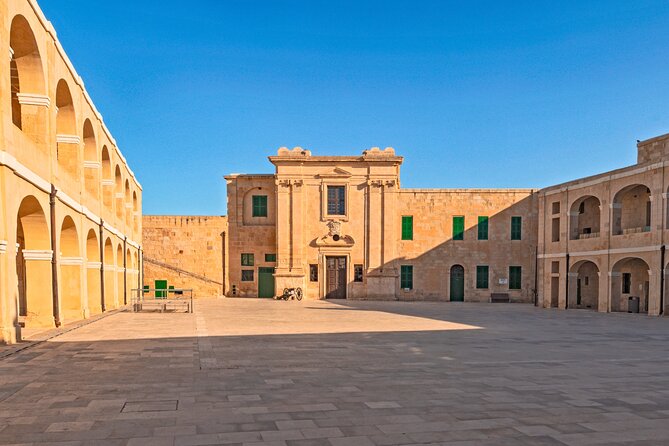
Start with the kind of views that make Valletta feel like a movie set. Fort St Elmo sits on the seaward shore of the Sciberras Peninsula and watches the entrances to both harbors. It is tightly connected to the Great Siege of Malta in 1565, so you are not just looking at walls. You are walking inside a story about defense, strategy, and the way the fort system shaped the city’s survival.
From there, let the pass “read” Valletta in layers. Here are the stops that give you that layered feel:
MUŻA: Malta’s art museum in a historic Auberge
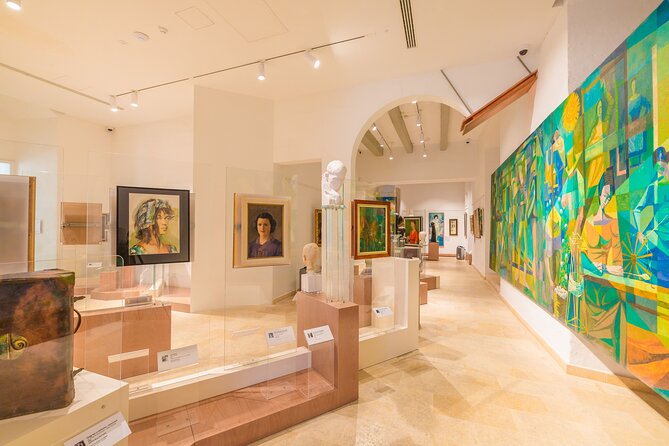
MUŻA, at Auberge d’Italie, is a smart break from fort walls and ancient stone. It focuses on major European art styles alongside Maltese artists, and the setting itself matters because it is tied to the Knights’ world of auberges and power.
Even if you are not an art superfan, MUŻA helps you reset your brain between prehistoric sites. It is also a reminder that Malta did not only become important because of ancient temples and sieges. It kept evolving.
A few more Valletta options worth comparing
- Hagar Qim temple (UNESCO), Limestone Heritage & Marsaxlokk Market guided tour
★ 4.0 · 10 reviews - The Taste and History of Valletta
★ 4.9 · 8 reviews - Valletta Private Historical and Cultural Walking Tour
★ 5.0 · 4 reviews - Malta: Prehistoric Temples, Limestone Heritage & Blue Grotto
★ 4.2 · 412 reviews
State Rooms at the Presidential Palace: power, then paper
The State Rooms are part of the Presidential Palace, a centerpiece in Valletta’s World Heritage zone. The palace traces back to the early days of Valletta’s founding after the siege, then it shifts roles during the British period. This is the kind of site that makes you think about Malta as an administrative island, not only a tourist postcard.
You should also know that this site can be closed at short notice, so it is a good idea to avoid counting on it as your only “inside” plan for a day.
Palace Armoury: knights in metal and Ottoman contrasts
If Fort St Elmo is the big military mood, the Palace Armoury is the detail mood. The armor and weapons connect to the Knights of St John and the era when they defended the island against Ottoman pressure.
This stop works especially well if you like seeing objects with names and clear purpose. It is one of those places where the history feels tangible because you are looking at equipment rather than only reading about it.
Domvs Romana: Roman life, shown through mosaics
Domvs Romana gives you a taste of private life inside a Roman townhouse. Even though less of the structure survives, the mosaics and artifacts that remain help you picture how an aristocratic home in Malta might have looked and felt.
This stop is a useful palate cleanser, because it shifts you from “siege and knights” into “everyday elite life,” which makes Malta’s timeline feel less like a straight line.
The Grand Harbour cruise plus Birgu forts: Fort St Angelo and the Maritime Museum
Valletta is dramatic from the water, and the harbor cruise is the easiest way to experience the city’s defense geography without walking until your legs are bargaining with you. The cruise covers Valletta and the Three Cities, and because it includes free Wi-Fi, you can also take a moment to check back in with your plan mid-ride.
Then pivot to Birgu, where forts and maritime history go together.
Fort St Angelo: headquarters energy at the center of the harbor
Fort St Angelo stands in the middle of the Grand Harbour area. It started as Castrum Maris in the medieval period, then the Knights rebuilt it into a bastioned fort. It is strongly tied to the Order’s headquarters during the Great Siege.
This stop feels good right after your cruise because you can match what you saw from the water to what you are facing in person.
Malta Maritime Museum: from prehistory to modern sailing
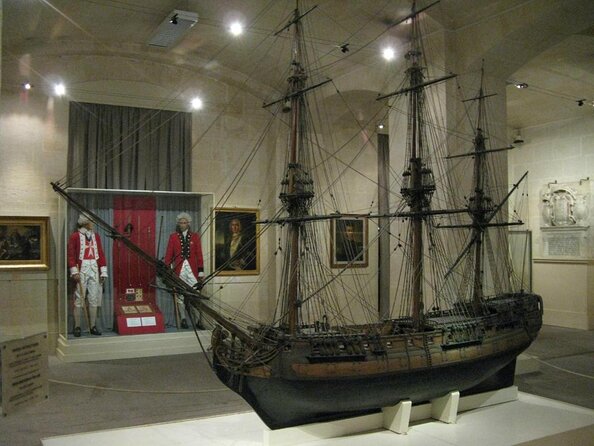
The Malta Maritime Museum is housed in a former Royal Naval Bakery built for the Mediterranean Fleet. The collection spans from prehistory to the present, and the museum has over 20,000 artifacts, which is a huge scale for a single island museum.
If you like maritime history at all, this is one of the better ways to understand Malta’s “in-between” location. Malta was never just land. It was a crossroads for boats, supplies, and strategic routes.
Mdina’s natural history, underground Christianity, and a Roman reality check
If Valletta feels like stone walls and power, Mdina and the Rabat area feel like Malta thinking in longer time spans. The pass includes a strong cluster of stops here.
National Museum of Natural History: Maltese ecosystems, plants, and birds
The National Museum of Natural History is in Palazzo Vilhena in Mdina, run by Heritage Malta. It gives an overview of Maltese ecosystems, including plants and birds that are tied to the island.
The best part for most people is the way it mixes “on land” with “under water.” You also get minerals, fossils, insects, reptiles, birds, mammals, fish, plus sections on geology and palaeontology. It is a calm, indoor reset after a lot of outdoor heritage.
St Paul’s Catacombs: early Christianity in a built underground system
St Paul’s Catacombs connect you to Malta’s early Christianity archaeology through underground galleries and tombs dating roughly from the third to eighth centuries CE. The site complex has over 30 hypogea, and more than 20 are open to the public.
This place gives you the feeling of how much human labor goes into survival, faith, and memory. It is also the kind of site where being slightly quiet is the right energy, because you are moving through spaces that were designed for remembrance.
Museum stops that add context to your timeline
Between Domvs Romana and St Paul’s Catacombs, you get a timeline jump that feels real. The Roman home artifacts help you see how elite life looked before late antiquity shifts into early Christian burial practices.
South coast megalith circuit: Ħaġar Qim and Mnajdra timing tips
If you do only one zone of “ancient Malta,” make it the south coast megalith temples. These are some of the earliest religious structures on Earth, built from globigerina limestone, the stone that shows up again and again across Malta’s megalithic architecture.
Ħaġar Qim: the ridge-temple feeling
Ħaġar Qim sits on a ridge on Malta’s southern edge. The setting matters. You are not only seeing structures, you are seeing how the builders used the landscape and stone. The limestone itself connects to Malta’s geology, which makes the site feel rooted in place rather than floating in time.
Mnajdra: ancient mastery under protective cover
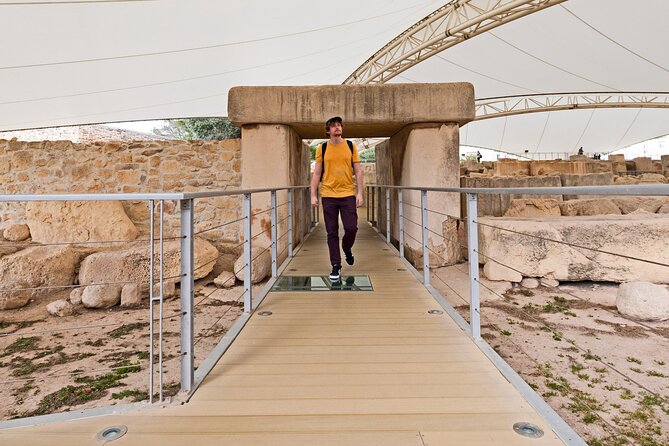
Mnajdra is very close to Ħaġar Qim. It was built around the fourth millennium BCE, and it has major UNESCO recognition as part of the Megalithic Temples of Malta. In 2009, work was completed on a protective tent, which is useful to know because it can affect your immediate view and how it feels to stand inside the site perimeter.
For planning, think in terms of light and comfort. If you are trying to do multiple temple sites on one day, give yourself a little buffer, because you will want time to look closely at the stone surfaces, and you do not want to rush your photos.
Prehistory around Malta: Ta’ Ħaġrat, Skorba, Borġ in-Nadur, and Hal Tarxien
One of Malta’s weird and wonderful facts is that the island is packed with prehistoric temple sites. The pass gives you access to several, which means you can compare styles and time periods without being stuck in one area.
Here are the prehistory stops you can fit into your schedule.
Ta’ Ħaġrat: UNESCO megaliths among the oldest
Ta’ Ħaġrat in Mġarr is recognized as a UNESCO World Heritage Site alongside other megalithic temples. It is among the world’s oldest religious sites, with the larger temple dating to the Ġgantija phase (3600 to 3200 BCE) and the smaller dated to the Saflieni phase (3300 to 3000 BCE).
This is a great stop for people who like chronological comparisons. You can feel how “temple building” evolves across time, even if your details knowledge is basic.
Skorba: early Neolithic clues
Skorba temples are megalithic remains on the northern edge of Żebbiegħ. The site was excavated in the early 1960s, later than some other megalith sites studied much earlier. That excavation timing matters because it adds a sense of how long this island’s evidence has been waiting for interpretation.
Borġ in-Nadur: temple plus Bronze Age village and fortification
Borġ in-Nadur overlooks St George’s Bay near Birżebbuġa. It includes a Tarxien phase megalithic temple and remains of a Bronze Age village. The description includes the earliest fortification in Malta, which is the kind of fact that makes you look at the site with a different question in mind, not just where people prayed, but how they organized protection.
It’s also close to other features like Bronze Age cart ruts and silos, plus a Roman villa at Ta’ Kaċċatura and a later Saint George Redoubt. You do not need to see everything, but knowing it is a dense heritage area helps you appreciate why this part of Malta keeps turning up in archaeology conversations.
Hal Tarxien: three attached temples and decorated slabs
Hal Tarxien includes three separate but attached temple structures. The main entrance today is a reconstruction from 1956, and many decorated slabs were moved indoors for protection at the museum in Valletta. The temples span time periods around 3100 BCE and 3000 BCE, plus an older smaller temple dated about 3250 BCE further east.
If you like the idea of seeing detailed stone carvings but also want the comfort of knowing some pieces were preserved for conservation, this stop hits the right balance.
Ġgantija-age to real remains: Ghar Dalam Cave and Museum
Għar Dalam is one of Malta’s most important national monuments. It is a 144 metre long phreatic tube and cave in Birżebbuġa. What makes it stand out is that it contains bone remains of animals that were stranded and later became extinct in Malta at the end of the Last Glacial Maximum.
It also lends its name to the Għar Dalam phase in Maltese prehistory. If you like prehistory that feels less like art and more like physical evidence, this is a strong addition. It is also a reminder that Malta’s story includes dramatic environmental change, not just human construction.
How to use the pass smoothly: QR codes, closures, and bus-stop sanity
This is where you can win or lose value.
Scan the QR code for opening times
One important rule: when you purchase passes that include sites and attractions, you should scan the QR code to see opening times for each place. Don’t guess based on vibes or past visits. It is the easiest way to avoid disappointment if something is closed that day.
Have a backup plan for inside sites
Some sites can close at short notice. If your day is packed tight, keep one flexible slot so you do not collapse your schedule if a palace or museum is unavailable.
Use the same boarding point for the bus when possible
A repeated practical problem is knowing where to get back on. If you do not board where you last got off, you might waste time circling the waterfront or walking in the wrong direction. Before you leave a stop, take a photo of the stop area or note the nearest reference point.
Ask for help on the ground when your plan feels fuzzy
Several staff members show up in positive feedback for guiding people through the best options. Names mentioned include Diane Zammit and Sandra Fenech for pass planning, plus Monalisa and Giancarlo connected to ticket help and advice at specific locations. Even if you think you understand your route, asking one quick question can save you an hour of walking.
What this pass is best for (and what it is not)
This Heritage Pass is best for you if:
- You like history across time periods, from prehistoric temples to Roman mosaics to early Christianity
- You want to rely on a structured set of included stops rather than building everything from scratch
- You want scenic movement, not only museum afternoons, especially with the harbor and coastal cruises
It might not be the best fit if:
- You are staying far from the bus and cruise zones and do not want to do extra transfers
- You prefer to see fewer sites but linger for long periods
- You are expecting every single included attraction to be open every day without checking opening info
Should you book the Heritage Pass in Malta?
I would book it if your goal is fast, well-rounded coverage, especially if you enjoy mixing outdoor ruins with indoor museums and you want the cruise time to tie it together. It is also a good choice when you want less stress about how to fit Fort St Elmo, major temples like Ħaġar Qim and Mnajdra, and underground sites like St Paul’s Catacombs into one trip.
Skip it or consider a lighter approach if you know you will only visit a handful of places. With a price like this, you need to use the pass actively, not just keep it in your bag for emergencies.
If you do book it, follow two rules and you will feel in control: scan the QR code for opening times before you commit to a site, and treat the bus stops like they matter, because they do.
FAQ
What is included in the Heritage Pass for Malta?
The pass includes access to 20+ heritage sites, unlimited use of the hop-on hop-off bus, a harbor cruise of Valletta and the Three Cities, and a coastal route connected to Comino and Gozo. Both cruises offer free Wi-Fi on board.
Where does this experience start?
It’s based in Valletta, Malta.
How long is the pass valid for?
The tour summary lists it as approximately 3 days. Make sure to check the validity details shown with your pass instructions.
How much does the pass cost?
It is listed at $92.69 per person.
How far in advance do people typically book?
On average, it is booked 28 days in advance.
What are the opening hours for the included attractions?
The listed hours are 8:00 AM to 6:00 PM, Monday through Sunday.
Do I need to buy separate tickets at each site?
The pass is designed to provide admission access to the included attractions, and it is marketed as helping you avoid waiting in ticket lines.
Is Wi-Fi available during the cruises?
Yes. The harbor cruise and the coastal cruise options include free Wi-Fi on board.
What should I do before I go to a specific site?
Scan the QR code included with your pass to check opening times for each attraction.
What happens if a site is closed?
You should check opening times using the pass QR code, since access depends on each attraction’s status for the day.
Does weather affect the experience?
Yes. The experience requires good weather, and if it is canceled due to poor weather, you should be offered another date or a full refund.
Just added to our Valletta list
- World War II Malta Full-Day Walking Tour★ 4.3 · 18 reviews
- Vintage Bus Tour: Aviation Museum & Mosta Church inc Platter★ 4.3 · 20 reviews
- Valletta: Street Food Walking Tour with a Local★ 4.9 · 15 reviews
- Afternoon Harbours Cruise with Guide and Roundtrip Transfers★ 3.4 · 11 reviews
- Valletta: Private Maltese Cuisine Walking Tour★ 4.8 · 8 reviews
- Valletta – Private Photo Session (English/Polish)★ 5.0 · 8 reviews
- Valletta : Highlights & Hidden Gems Walking Tour★ 3.1 · 5 reviews
- Valletta & Mdina: Private Tour★ 4.5 · 16 reviews
Historical Tours, compared.

Prehistoric Temples, Limestone Heritage & Blue Grotto
Read our review →
Maltese Islands History Audio-Visual Show and La Sacra Infermeria Tour
Read our review →
Self-Guided Historical Walking Tour (Audio Guide)
Read our review →
Wonderful Valletta, gastronomy, art, and history in the Mediterranean
Read our review →


Private Historical City Walking Tour with Rabat Town
Read our review →
The Limestone Heritage Park and Gardens (Entry Ticket)
Read our review →Browse the lists this tour appears in