
REVIEW · HISTORICAL TOURS
Wonderful Valletta, gastronomy, art, and history in the Mediterranean
Valletta is small, but it packs a punch. This 2-hour walk through the old capital helps you connect history to street-level details, and it also keeps your stomach in the loop with Maltese bites like pastizzi. You end right near one of Valletta’s biggest landmarks, St. John’s Co-Cathedral, so the route has a satisfying finish, not just a random loop.
One thing to consider: the balance can tip toward politics or local story over strict, check-every-fact history. If you prefer only grounded dates and fewer opinions, go in with the right expectation and ask your guide to separate legend from documented events.
In This Review
- Key highlights at a glance
- A two-hour Valletta walk that starts with the big question
- Starting at Victoria Gate, building momentum fast
- Valletta’s “why it mattered” history, explained in human-sized pieces
- The alleyway story of Caravaggio, and why it sticks
- Maltese food stops that actually fit the city
- British-era clues you can spot while you walk
- Guides, energy, and small-group questions
- Price and what you get for $54.31
- Where you finish, and how to keep the momentum
- Weather, timing, and comfort
- Who should book this Valletta tour?
- Should you book? My practical take
- FAQ
- How long is the Valletta tour?
- What’s the price per person?
- What language is the tour offered in?
- Where do the tour start and end?
- How big is the group?
- What if the weather is bad?
- Is confirmation available right away?
Key highlights at a glance
- Small group size (max 10), so you can ask questions without feeling rushed
- English-guided and designed to make Valletta feel understandable fast
- A timeline you can picture, from Ottoman influence to the Knights, Napoleon, the British, and other eras
- Art stop focused on Caravaggio, including the famous story tied to Valletta’s alleys
- Maltese food with context, including pastizzi, plus suggestions for pizza and drinks with a local vibe
- Ends near St. John’s Co-Cathedral, handy if you want to continue on your own
A two-hour Valletta walk that starts with the big question
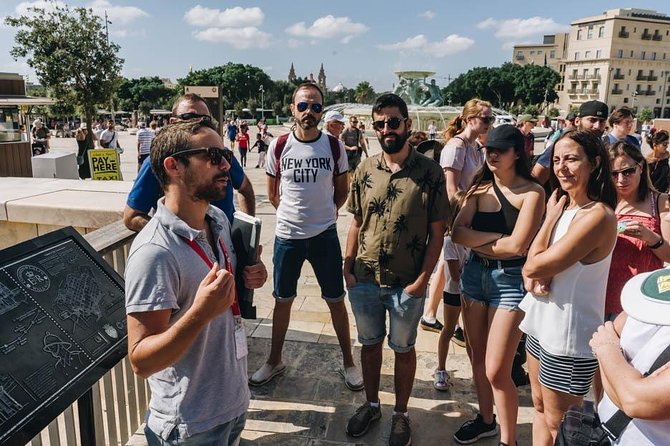
Valletta’s charm is that it is compact. In a couple of hours you can move from one era to the next, and the streets help you “see” how different powers left their fingerprints behind. The tour is built to answer one simple question: why Valletta became such a coveted Mediterranean city over and over again.
That story matters because Malta can feel like one continuous postcard unless you get the timeline. Here, you walk the streets while the guide strings together the Ottoman Empire, the Knights, Napoleon, the British period, and even the later wartime era. You do not just hear names. You learn what those eras changed in how the city was organized, defended, and remembered.
And yes, this is also an evening of practical culture. You finish with a clearer sense of where to go next, what to skip if you are short on time, and where to eat beyond the most obvious tourist spots.
A few more Malta options worth comparing
- Malta: Prehistoric Temples, Limestone Heritage & Blue Grotto
★ 4.2 · 412 reviews - Maltese Islands History Audio-Visual Show and La Sacra Infermeria Tour
★ 4.0 · 344 reviews - Valletta: Self-Guided Historical Walking Tour (Audio Guide)
★ 3.7 · 251 reviews
Starting at Victoria Gate, building momentum fast
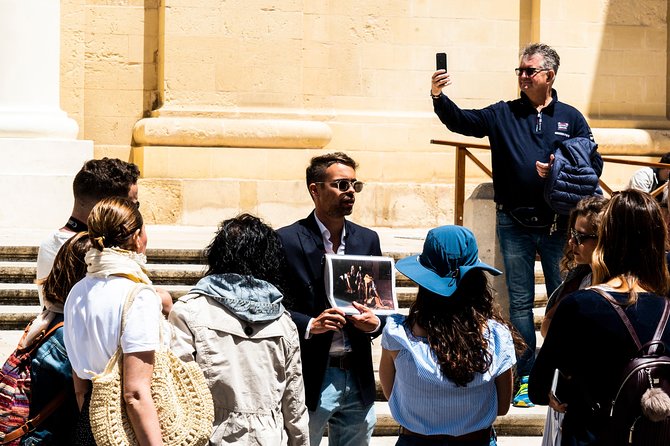
Your walk begins at Victoria Gate, a clear meeting point in Valletta’s city walls area. From there, you start threading into the inner streets where the character changes block by block. This is a smart choice because Valletta’s best parts are walkable, but you still need a guide to avoid wandering in circles.
The tour is designed to be doable for most people. You are not committing to long distances or complicated transport. It is also near public transportation, which is useful if you are hopping between Malta’s busier areas and the capital.
One small detail I appreciate about this format is the pace. A 2-hour plan forces the guide to pick the essential streets and the meaningful buildings. That is great if this is your first time in Valletta and you want your bearings fast.
Valletta’s “why it mattered” history, explained in human-sized pieces
Valletta has a reputation for being all monuments and museums. This tour treats it more like a living timeline. The guide connects each historical layer to what you can actually see: fortifications, building styles, and the way the city’s central core formed.
You get a sweep of Mediterranean power struggles, including the Ottoman Empire’s pressure in the region, the Knights of St. John building and strengthening the city, and later shifts through Napoleon and the British era. The tour also includes references to the 20th-century period, which helps explain why Valletta feels layered rather than timeless.
What makes this kind of history useful is how it prevents the “everything is just old” effect. Instead of memorizing dates, you learn to recognize patterns, like how empires invest in defenses, religion, and administrative centers when a place matters strategically.
The alleyway story of Caravaggio, and why it sticks
Art in Valletta is not confined to a museum label. You often learn best when you tie art stories to the streets where the drama is supposed to have happened. This walk includes the famous tale about Caravaggio escaping justice, tied to Valletta’s alleys.
Even if you treat it as story rather than strict courtroom fact, it works. You remember the feeling of the city as a maze and the sense that artists and troublemakers moved through the same narrow spaces. That is how the tour makes art more than a name on a brochure.
You also hear about 16th-century buildings from the early period when Valletta’s identity as a fortified capital was taking shape. That pairing helps you see why people still talk about Valletta as both an artistic place and a strategic one.
A different way to spend the day nearby:
- Malta: Gozo & Comino Islands, Blue Lagoon & Seacaves Tour
★ 4.5 · 15,672 reviews - Sliema: Cruise to Comino, Crystal Lagoon, and Blue Lagoon
★ 4.5 · 6,855 reviews - Malta: Gozo, Comino & Blue Lagoon Cruise – swim & sightsee
★ 4.7 · 6,564 reviews - Comino: Blue Lagoon, Crystal Lagoon, and Seacaves Tour
★ 4.6 · 5,673 reviews
Maltese food stops that actually fit the city
A Valletta tour should include food, because Malta’s cuisine is part of the culture, not an afterthought. Here, you get Maltese gastronomy in the middle of the walking story, not at the end when you are tired and hungry and just want anything.
Pastizzi is the big one mentioned, and it is a great choice. These flaky, cheesy or mashed filling pastries are a Maltese staple, and tasting them gives you something immediate and snackable while you are learning. It also helps you understand why locals eat quickly between errands and still treat food as a daily pleasure.
The tour also points you toward pizza options and the kind of drinks you might enjoy with a jazz vibe tied to the dolce vita era. One note for your expectations: the food component may be more of a tasting and recommendations than a full formal meal. If you are hoping for a long, structured tasting menu, you might find this is more “quick bites with guidance” than “food tour all the way.”
British-era clues you can spot while you walk

Valletta is full of subtle British-era reminders, and this tour gives you permission to look for them. You are pointed toward details like red telephone booths and the everyday presence of English as an official co-language.
That matters because it changes how you experience signage, accents, and even the feel of certain public spaces. Without this context, you might just chalk it up to “tourist infrastructure.” With it, you start recognizing how Malta’s history shows up in modern habits.
It also makes the city feel more readable. When a guide turns a random object into a historical clue, you feel like you are cracking a code rather than just sightseeing.
Guides, energy, and small-group questions
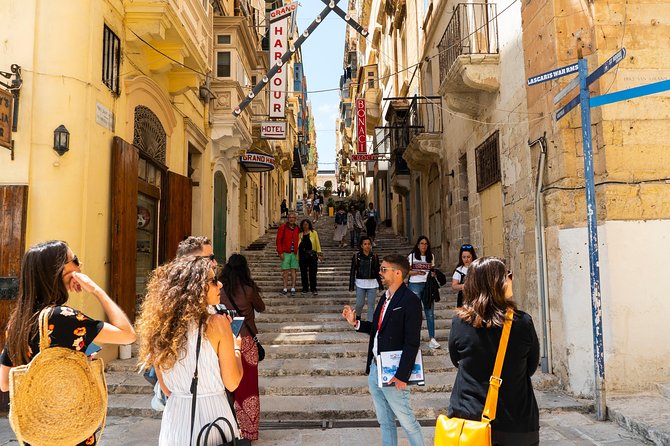
This tour works best when the guide can turn a schedule into conversation. The experience is set up for small groups, with a maximum of 10 people, and that helps a lot. You are not trapped in the back of a big pack.
The guide team is part of the appeal, with names like Luis, Moises, and Julia showing up in the guide lineup. Across these styles, the recurring themes are friendliness, strong city orientation, and a willingness to share practical next steps.
That said, one criticism pops up that is worth taking seriously. If your guide leans heavily into current politics or favors local legends presented as certain fact, you may feel the history component becomes less rigorous. You can reduce this risk by asking your guide directly, in a friendly way, what is documented history and what is a local tale.
Price and what you get for $54.31
$54.31 for roughly 2 hours in Valletta is not a bargain, but it is also not outrageous for a city with so much to see packed into one compact area. The value comes from three things: guided pacing, historical framing, and food integration.
In practical terms, you are paying for someone to choose the route, explain the layers, and point you toward tastings and later recommendations. If you are traveling with limited time, that can be worth it. Valletta is easy to walk, but it is hard to “understand” without help on the first day or first evening.
The best match is a visitor who wants a strong foundation, not a deep, museum-level education. If you already know Valletta’s timeline and you plan to spend hours in churches and museums, you may find you can DIY it. For everyone else, this is a time-efficient way to get your bearings and your appetite moving.
Where you finish, and how to keep the momentum
The tour ends at St. John’s Co-Cathedral area, on Triq San Gwann. Ending near a major landmark is practical because it gives you options immediately after the walk.
If you want to keep exploring, you are in the right neighborhood to shift into self-guided sightseeing. If you want food next, you are already in a central zone where recommendations start to make sense.
And if you are the type who likes to feel local by asking the right questions, this is exactly the moment to follow up. Ask your guide what to do next based on your interests. You might be surprised by how much smoother the rest of your day feels once you have a route logic.
Weather, timing, and comfort
This tour depends on good weather. Valletta walking is pleasant when the sun is decent and the sidewalks are dry. If conditions are rough, expect the operator to change plans, offer another date, or refund.
Timing also matters. The experience runs during set daily hours, from 11:00 AM to 5:00 PM. If you prefer a quieter walk and better light for photos, choose an earlier slot when possible.
In terms of comfort, it is a walking tour, but it is framed as suitable for most travelers. Service animals are allowed too, and the meeting point is near public transportation, which helps if you are managing mobility needs or hopping between stops.
Who should book this Valletta tour?
Book it if you want:
- A first-time Valletta orientation that connects the city’s big eras to the streets you are standing on
- A history and food mix, with pastizzi and on-the-ground guidance for where to eat and drink
- An energetic English guide you can talk with, helped by a small maximum group size
Skip it or research alternatives if:
- You want a strict, academic history focus with minimal opinion or contemporary talk
- You are expecting a full food crawl with multiple planned tastings and longer stops
- Your trip is tight and you cannot risk a weather-related date change
Should you book? My practical take
I’d book this if Valletta is new to you and you want to leave with a mental map, not just photos. The combination of historical storytelling, art context around Caravaggio, and a Maltese food start like pastizzi makes the 2-hour format feel efficient.
Just set expectations: this is a guided walking experience with tastings and guidance, not a multi-hour gastronomy program. Also, if you are sensitive to politics chat or to legends being treated like facts, ask your guide to clarify what is legend versus documented history.
If those points fit your style, this is a strong way to understand why Valletta keeps pulling people back to the Mediterranean.
FAQ
How long is the Valletta tour?
It’s about 2 hours.
What’s the price per person?
The price listed is $54.31 per person.
What language is the tour offered in?
The tour is offered in English.
Where do the tour start and end?
It starts at Victoria Gate and ends at St. John’s Co-Cathedral (Triq San Gwann).
How big is the group?
The maximum group size is 10 travelers.
What if the weather is bad?
The tour requires good weather. If it’s canceled due to poor weather, you’ll be offered a different date or a full refund.
Is confirmation available right away?
You receive confirmation at booking time unless you book within 8 hours of travel, in which case confirmation is received as soon as possible subject to availability.
Just added to our Malta list
- World War II Malta Full-Day Walking Tour★ 4.3 · 18 reviews
- Witchcraft and Blood in Birgu – Walking Tour★ 4.7 · 3 reviews
- Vintage Bus Tour: Aviation Museum & Mosta Church inc Platter★ 4.3 · 20 reviews
- Gozo Full-Day Group Coach Tour including Lunch and Transfers★ 4.3 · 7 reviews
- Gozo: Wine Tasting and Paired Dinner Experience★ 4.9 · 43 reviews
- Visit Tarxien Temples, Kalanka Bay, Blue Grotto, Marsaxlokk★ 3.9 · 13 reviews
- Wakeboarding Adventure in Malta: Learn to Ride★ 5.0 · 4 reviews
- Valletta: Street Food Walking Tour with a Local★ 4.9 · 15 reviews
Historical Tours, compared.
Prehistoric Temples, Limestone Heritage & Blue Grotto
Read our review →
Maltese Islands History Audio-Visual Show and La Sacra Infermeria Tour
Read our review →
Self-Guided Historical Walking Tour (Audio Guide)
Read our review →

Private Historical City Walking Tour with Rabat Town
Read our review →
The Limestone Heritage Park and Gardens (Entry Ticket)
Read our review →
Pre-Historic Temples (Pickup, Tickets & Drop-off Inc)
Read our review →Browse the lists this tour appears in