
REVIEW · WALKING TOURS
The Grand Tour of Valletta: A walking tour of Valletta.
Valletta gets way more interesting on foot. This 2-hour guided walk shows you a fortified city shaped by the Great Siege of 1565 and battered again in WWII, with theatrical, story-driven guiding and plenty of time to ask questions along the way. I love that the pace feels intimate, not a cattle-herd setup, and you get story threads that connect famous landmarks to the smaller, stranger bits of life in the Knights era. One thing to consider, if you want constant motion, is that the stops are short and a few are more about explanation than walking.
I also like that you get more than a route of monuments. The tour aims to put you inside the mindset of Knights of Malta, from courtly rituals to the supposed vow of chastity, plus the drama around the bloodiest battle of the 16th century. If you are hoping for museum interiors, don’t count on it, because museum tickets are not included.
Finally, the practical side is easy: it is led in English by a live guide, it is wheelchair accessible, and it starts right at the Triton Fountain area. If you show up ready to look up, listen closely, and take photos at the viewpoints, you’ll get a lot out of the $24 price.
In This Review
- Key highlights you’ll care about
- Why this Valletta walking tour feels different
- Start at Triton Fountain, then get your bearings fast
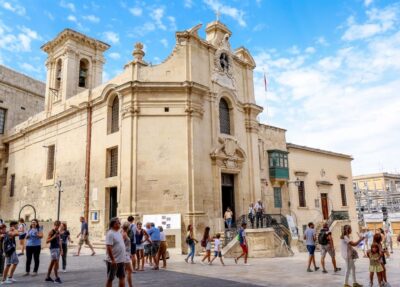
- Royal Opera House stop: power dressed in elegance
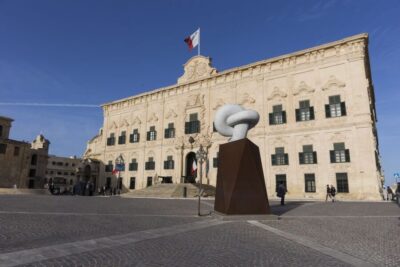
- Auberge de Castille: where organization meets symbolism
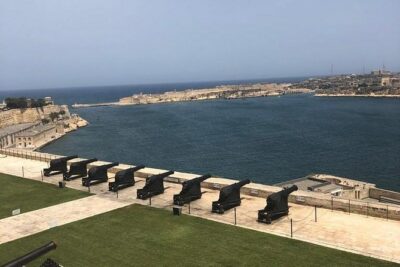
- Upper Barrakka Gardens: the photo stop that also explains the siege
- St. John’s Co-Cathedral and the Grandmaster’s Palace: what you learn even without museum tickets
- Misraħ San Ġwann finish point: tie it together before you move on
- Price and logistics: $24 for a tightly guided, story-first experience
- The guides are the secret ingredient, and you can feel it in the stories
- What might not be for everyone
- Who should book this Valletta walk?
- Should you book the Grand Tour of Valletta?
- FAQ
- Where does the tour start?
- How long is the Grand Tour of Valletta?
- What is the price?
- Is museum entry included?
- Is the tour wheelchair accessible?
- What language is the guided tour in?
- Can I cancel and get a refund?
Key highlights you’ll care about
- Small-group feel, so questions and back-and-forth are actually possible
- Theatrical storytelling, with guides who use drama and art-style presentation
- Photo timing at Upper Barrakka Gardens, built into the walking flow
- Knights of Malta focus, including court life, vows, and the city’s siege-era reality
- Stops at Royal Opera House and Auberge de Castille, plus a clear finish point at Misraħ San Ġwann
Why this Valletta walking tour feels different
Valletta is a city where stone has opinions. The walls, bastions, and viewpoints are not just pretty backdrops, they are the stage for centuries of power struggles and survival. This tour leans hard into that, so you are not just ticking off sights. You are hearing how the city was forged by the Great Siege of 1565, and then how it was nearly destroyed during WWII, leaving scars that still shape how you read the streets.
The best part is the way the stories connect. You start with big-name landmarks like St. John’s Co-Cathedral and the Grandmaster’s Palace, but you also hear lesser-known angles, anecdotes, and even gossip. That mix matters because it helps the place feel human, not like a list of facts to memorize before coffee.
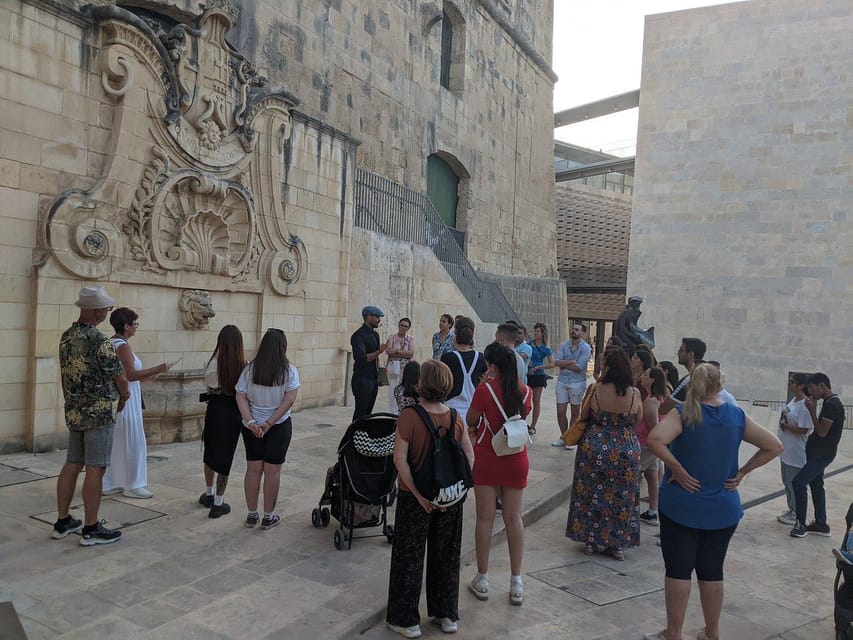
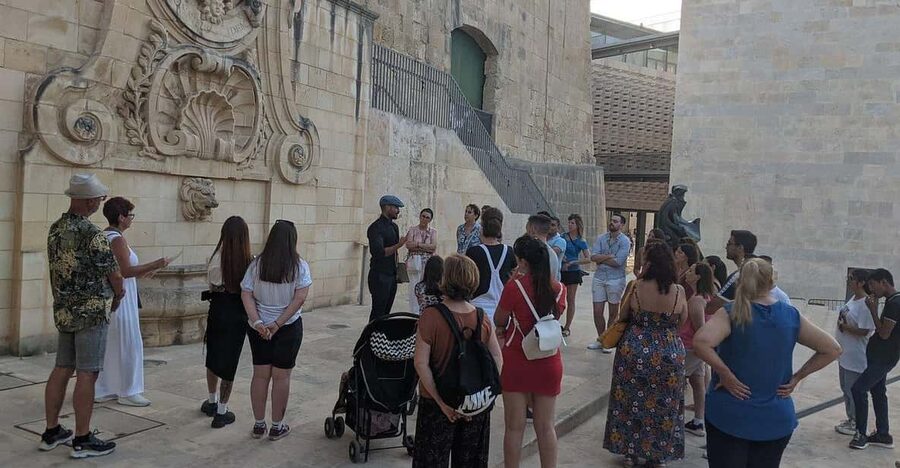
Also, the format is designed to keep things manageable. The tour is positioned as avoiding large groups, and that really changes the experience. In a busy crowd, you mostly hear your guide’s voice getting swallowed by other people. Here, you can actually ask a question, point at a detail, and get an answer that makes the stone feel less distant.
More Walking Tours in Valletta
- The Original Valletta Walking Tour
★ 5.0 · 2,719 reviews - Valletta: 3-Hour Walking Tour
★ 4.7 · 2,219 reviews - Valletta: Guided City Walking Tour
★ 4.8 · 1,256 reviews
Start at Triton Fountain, then get your bearings fast
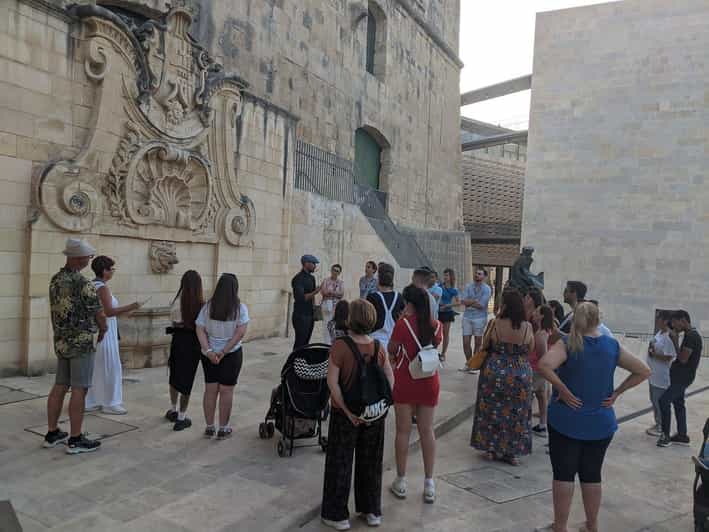
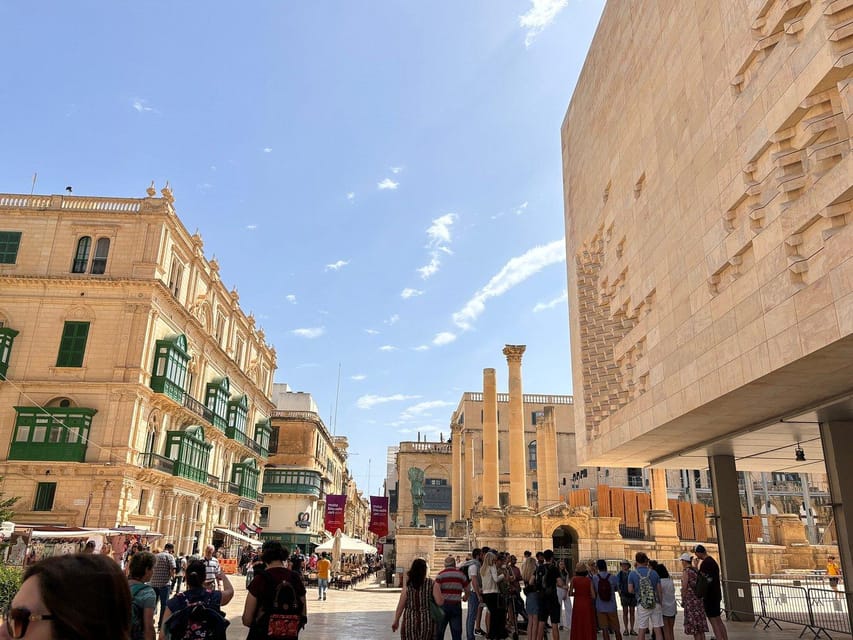
Your tour begins around Triton Fountain, with the guide around the fountain area holding a HOUSE OF TOURS board. This is a smart starting move. Triton Fountain is a natural reference point, so even if you arrived in Valletta this morning with a half-formed plan, you quickly get oriented.
From the first minutes, the guide typically frames Valletta as a fortified city built to defend and control. That framing is what makes the later stops click. When you understand why people built up and packed in here, streets, arches, and viewpoints become logical instead of random.
Practical tip: if you want better photos, take 30 seconds before the group moves to confirm your angles. Valletta has strong sight lines, but the best shots depend on where you stand at the start.
Royal Opera House stop: power dressed in elegance
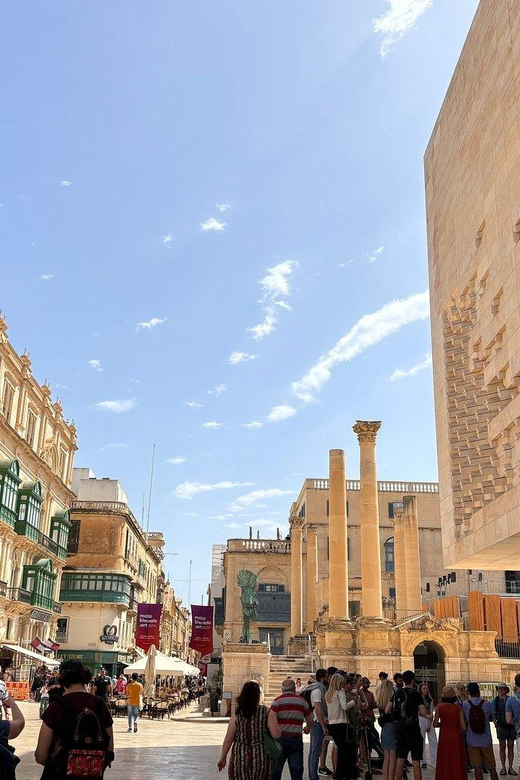
The walk takes you to the Royal Opera House, with about 8 minutes guided time. This is not a long stop, so you will want to use it for context. Your guide uses it to talk about how the city’s identity spans dramatic military history and ceremonial cultural life.
I like this kind of contrast. Valletta can feel like a closed world, all fortifications and religious power. Then you hit a place like the Royal Opera House and the story reminds you that the Knights era and the later civic era both left marks. It turns the city into a timeline you can actually see, not just a map of buildings.
If you are the type who likes to understand why a landmark exists where it does, you will get a lot out of this short stop. If you prefer slow pacing and longer photo breaks, 8 minutes can feel tight, but it keeps the tour moving toward the best viewpoint.
Auberge de Castille: where organization meets symbolism
Next up is Auberge de Castille, another guided segment of roughly 8 minutes. Even in a short time window, this stop matters because the Auberge system was central to how the Knights lived. Your guide brings the idea to life through stories about knightly life, lavishness, and strict codes.
This is where theatrical storytelling can really pay off. When the guide frames it right, Auberge de Castille stops being a name on a sign. It becomes a clue to how people were housed, how order was maintained, and how status was displayed.
What I particularly like here is the way the tour ties the human side of the Knights to the city’s physical design. Valletta feels like it was built for control, and the Auberge system was part of that. You start understanding why the streets and buildings feel intentionally close.
A few more Valletta options worth comparing
- Valletta: Street Food and Culture Walking Tour
★ 4.8 · 1,251 reviews - Valletta: City Walking Tour in a Small Group
★ 4.9 · 957 reviews - Valletta: Maltese Food and Drink Guided Walking Tour
★ 4.7 · 601 reviews - Valletta City Walking Tour
★ 5.0 · 395 reviews
Upper Barrakka Gardens: the photo stop that also explains the siege
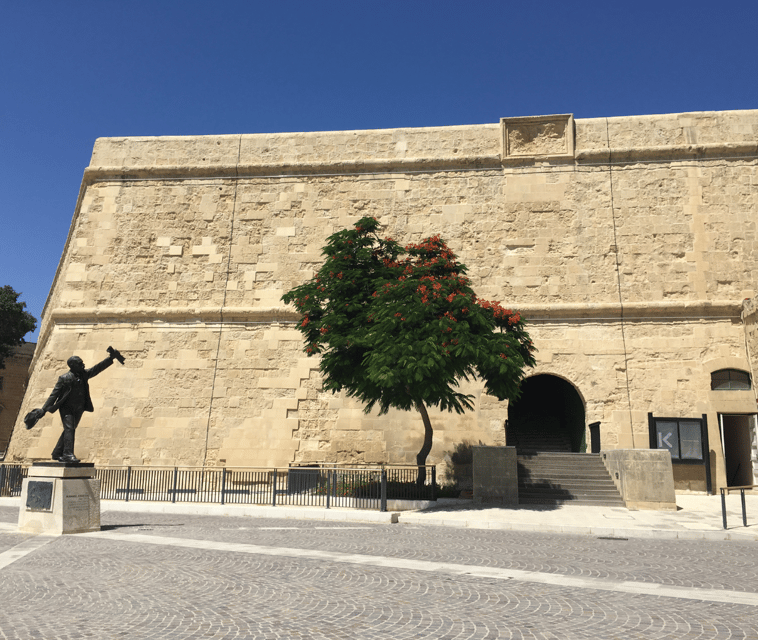
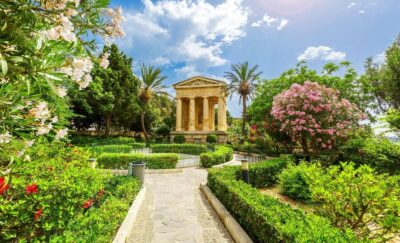
The itinerary includes Upper Barrakka Gardens as a photo stop with guided time of about 15 minutes. This is the moment you will likely remember most visually. The view gives you the “why” behind the fortress layout: who needed to watch what, and how movement and visibility shaped defense.
But it is not just about views. Your guide uses the garden viewpoint to connect the Great Siege of 1565 to the city’s defensive logic. It is the kind of story that makes you look at the skyline differently. Instead of treating everything as pretty architecture, you start reading it as a strategic system.
I love that the timing is built in. You get both guidance and real time to photograph. In many walking tours, viewpoint stops become rush jobs. Here, 15 minutes means you can take pictures, listen, and still breathe for a moment.
If you are traveling in bright weather, bring sunglasses and consider a light layer. Valletta sun can be strong, and gardens plus photos means you may stand in one spot longer than you expect.
St. John’s Co-Cathedral and the Grandmaster’s Palace: what you learn even without museum tickets
Even though the tour list highlights specific guided stops, the tour also references major Knights-of-Malta landmarks like St. John’s Co-Cathedral and the Grandmaster’s Palace. This is where the tour’s value shows up, because the guide doesn’t just point at big sights. They give you the backstory so you can recognize what you are looking at.
There is a key practical note here: museum entrance tickets are not included. That means you should plan to do any interior visits on your own before or after the tour, if you want them. But the good news is that you still get the context outside, so the time you spend in the streets feels purposeful.
This approach works well for first-timers. You get orientation plus meaning in a compact window, which helps when you later decide which sites deserve your extra time.
Also, the tour’s theme includes the bloodiest battle of the 16th century, the life of a knight, the lavish lifestyle, and an intriguing vow of chastity. Those themes are meant to make the Knights era feel less abstract. When you then stand near major sites, the details you hear make you look twice.
Misraħ San Ġwann finish point: tie it together before you move on
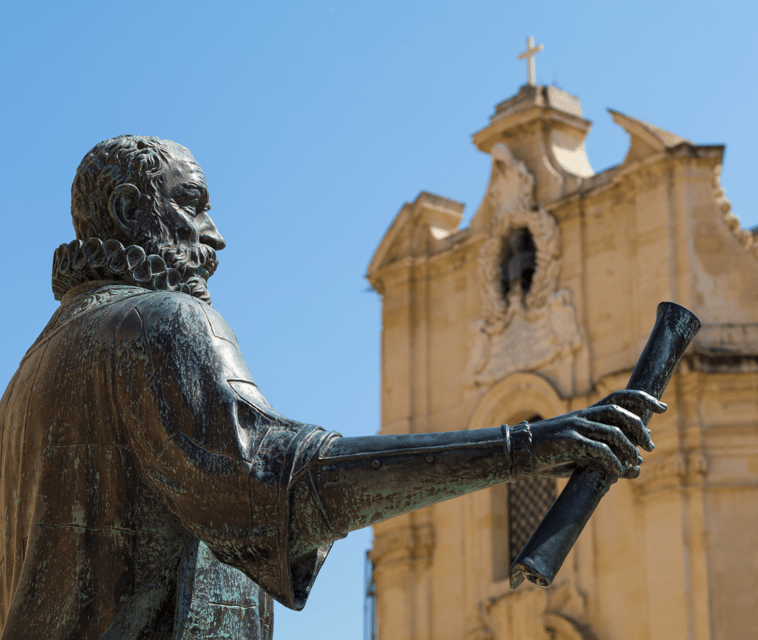
The walk finishes at Misraħ San Ġwann. Ending here is useful because it feels like a natural ramp-down. You are not dumped somewhere random. You complete the narrative arc: a fortified city forged by siege, shaped again by WWII damage, and governed through the Knights’ structure.
By the time you reach the end, you should feel like you can walk Valletta without needing to stare at a map constantly. The guide’s stories help you organize the place in your head, and that makes independent exploring afterward easier.
One small tip: after the tour ends, take five minutes to look back at the route you walked. It helps you spot the kinds of details your guide pointed out, and it makes your next stops feel less like you’re guessing and more like you’re continuing a conversation.
Price and logistics: $24 for a tightly guided, story-first experience
At $24 per person for about 2 hours, this tour is priced in the “value” category for a guided experience in a major European capital-like setting. You are paying for three things you rarely get together at this price point: an English-speaking live guide, a route that keeps you moving without feeling rushed, and the small-group format designed to avoid the worst parts of tour congestion.
It also helps that the tour includes guidance at the key moments, not just a sightseeing stroll. You get guided time at Royal Opera House and Auberge de Castille, and you get a longer viewpoint moment at Upper Barrakka Gardens.
What is not included is the museum side. So if you are the type who wants to go straight from walking tour to interior tickets, you will need to add that yourself. That is normal. Just plan it so you do not end the walk expecting entry to be bundled into the ticket.
Another practical plus: the tour is wheelchair accessible, and it is live guided in English. That matters because it keeps the tour from being a one-size-fits-all option that ignores different needs.
The guides are the secret ingredient, and you can feel it in the stories
This is the part that really drives the high rating. The tour is led by professional guides who combine history with theatrical storytelling. In plain terms, they do more than recite dates. They deliver the Knights era like it is happening in front of you.
From the experience of guides named Rafa, Lailla, Leila, Leyla, and Layla, the common thread is that they answer questions and connect Malta’s local details to bigger historical themes. One guide thread stands out from what people highlighted: you can learn surprising connections, like how St John’s Ambulance in the UK traces back to the Knights of St John in Valletta. That is the kind of detail that makes a tour worth repeating in your mind later.
Another guide strength that comes through: some guides have backgrounds in the arts and acting, which helps the pacing and delivery. It makes the history less like a lecture and more like a guided scene.
If you love dialogue and you like getting your questions answered on the spot, this tour is built for you. If you want a silent, self-guided walk with zero interaction, you may feel slightly more engaged than you planned.
What might not be for everyone
A fair caution: not every stop is long, and the flow is built around guided explanations and photo moments. One traveler preference that I think you should consider is that you may want more continuous walking and slightly shorter fact-heavy stops.
Translation: if your dream tour is one where you barely stop and just roam, you might feel the tour leans a bit toward structured storytelling. On the other hand, if you enjoy guided pacing and you want the meaning of the buildings right away, that structure is exactly what makes it work.
Who should book this Valletta walk?
I think this tour fits best if you are:
- Visiting Valletta for the first time and want a clear mental map fast
- Interested in the Knights of Malta, the Great Siege of 1565, and how WWII damage shaped the city
- The type who likes asking questions and getting answers in context
- Looking for a short, guided experience that also helps you choose what to explore next
It is also a good match for travelers who want a guide-led overview without spending your entire time buying tickets and queueing. Since museum entrances are not included, the tour still functions as a strong standalone intro.
Should you book the Grand Tour of Valletta?
Yes, if you want an efficient, story-first way to understand what you are looking at in Valletta. The $24 price makes sense because you are not just walking between stops. You are getting a narrative framework for the city, plus time at Upper Barrakka Gardens that lets you see and photograph the defensive logic.
Book it especially if you enjoy history explained with energy, with guides like Rafa, Lailla, Leila, Leyla, or Layla bringing the Knights era to life through drama and lots of questions. If you prefer museum interiors or long, uninterrupted wandering, you might pair this with your own additional time later in the day.
If you only have a couple of hours and you want Valletta to feel like a place with a pulse, this is a smart use of time.
FAQ
Where does the tour start?
The tour starts around Triton Fountain. Your guide will be near the fountain with a HOUSE OF TOURS board.
How long is the Grand Tour of Valletta?
The tour lasts about 2 hours.
What is the price?
It is $24 per person.
Is museum entry included?
No. Museum entrance tickets are not included.
Is the tour wheelchair accessible?
Yes, the tour is wheelchair accessible.
What language is the guided tour in?
The live guided tour is in English.
Can I cancel and get a refund?
Free cancellation is available up to 24 hours in advance for a full refund.
Just added to our Valletta list
- World War II Malta Full-Day Walking Tour★ 4.3 · 18 reviews
- Vintage Bus Tour: Aviation Museum & Mosta Church inc Platter★ 4.3 · 20 reviews
- Valletta: Street Food Walking Tour with a Local★ 4.9 · 15 reviews
- Afternoon Harbours Cruise with Guide and Roundtrip Transfers★ 3.4 · 11 reviews
- Valletta: Private Maltese Cuisine Walking Tour★ 4.8 · 8 reviews
- Valletta – Private Photo Session (English/Polish)★ 5.0 · 8 reviews
- Valletta & Mdina: Private Tour★ 4.5 · 16 reviews
- Valletta : Highlights & Hidden Gems Walking Tour★ 3.1 · 5 reviews
Walking Tours, compared.
Guided Walking Tour with Optional Cathedral Tour
Read our review →
The Valletta Street Food and Culture Walking Tour
Read our review →Browse the lists this tour appears in