
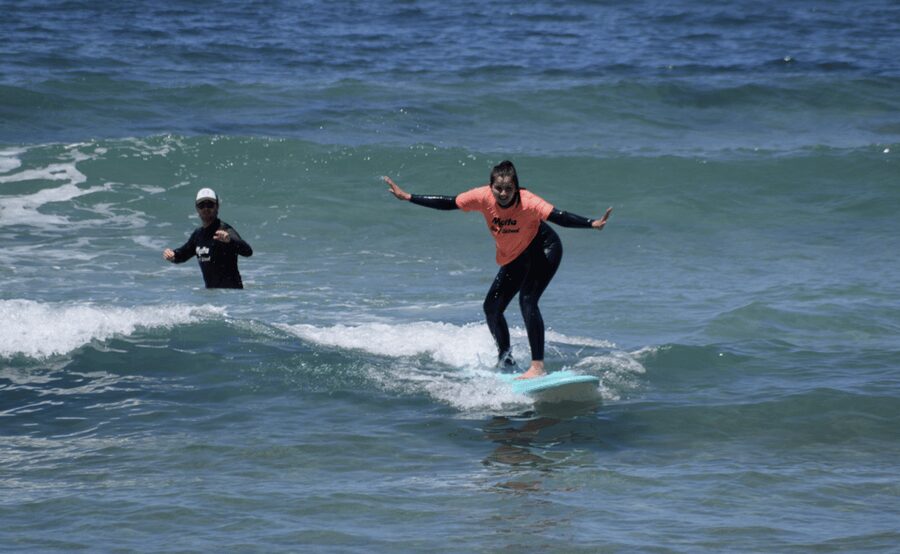
REVIEW · WORKSHOPS
Malta Surf School, Beginner Surf Lessons
Surfing your first wave sounds harder than it is. In Malta, this beginner lesson turns that dream into a step-by-step, safety-first session with real instruction. I like that it is small group focused, and you get close coaching as you learn the basics, not just a quick board handoff. I also like that instructors such as Valerio are described as clear and patient, guiding you step by step so your first attempts feel achievable.
There is one big consideration: the whole day is weather-dependent. If waves are not suitable, your session may shift to other water activities or be cancelled, so build in flexibility.
In This Review
- Key Points to Know Before You Go
- The 1-Hour Beginner Surf Session: What You Actually Learn
- Meet at the Beach Near Singita Kiosk, Look for the Blue Flag
- Beach Briefing and Safety Setup: Getting Oriented Fast
- Sand Practice That Builds Confidence, Standing Up Without Guesswork
- Moving Into Chest-High Water: Paddling, Catching Waves, Staying Safe
- Weather-Dependent Surf: What Happens If Waves Do Not Cooperate
- Price and Value: €60 for Gear and Coaching in a Small Group
- Who This Is Best For, and Who Should Skip It
- What to Bring, What to Wear, and What to Avoid
- Instructor Languages: English, Italian, Spanish
- Should You Book Malta Surf School Beginner Lessons?
- FAQ
- How long is the beginner surf lesson?
- What is the maximum group size?
- What is included in the lesson price?
- Where do I meet the surf school?
- What should I bring?
- What should I wear under the wetsuit in cooler weather?
- What happens if there are no waves?
- Is the lesson refundable if it gets cancelled?
- Are non-swimmers allowed?
- What languages do the instructors speak?
Key Points to Know Before You Go
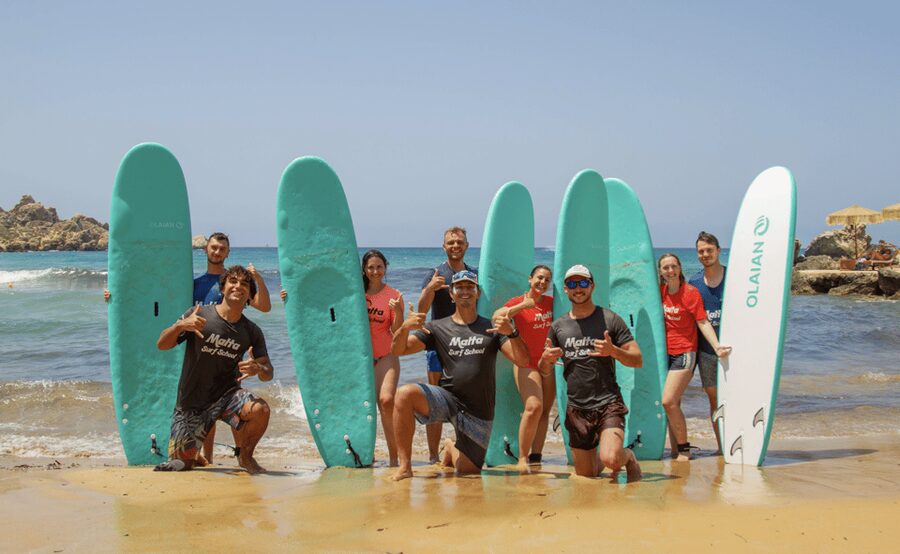
- Max 6 people keeps the coaching personal and the energy friendly.
- Sand-first practice helps you get the take-off and standing technique without panic.
- Chest-high water coaching gives you real wave time, with instructors watching closely.
- Weather-dependent schedule means you should check conditions and stay adaptable.
- Gear is included (surfboard and wetsuit), so you can travel lighter.
The 1-Hour Beginner Surf Session: What You Actually Learn
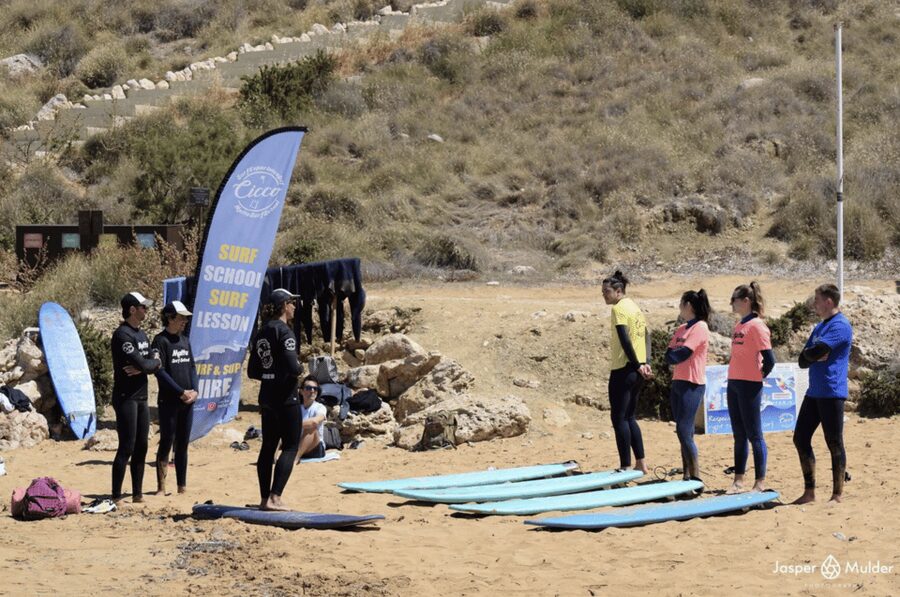
This is a true beginner format: one hour designed to get you from board basics to trying a ride, even if you have never stood on a surfboard before. The lesson is built around three stages, and each stage has a purpose.
First comes the beach intro. You get a surfboard briefing and surf spot guidance, including what to watch for and how the session works. Then you practice the key moves on sand, so you can build confidence before you are in moving water. Finally, you move into chest-high water with instructors close by, learning paddling, wave-catching, and how to time your pop-up.
The value here is not just the “fun part.” It is the structure. You start with the mechanics that usually make beginners stall out, the take-off technique and standing up in control. If you tend to overthink, the sand practice is your friend. It is also a good way to learn the board feel before water pressure and waves add chaos.
You should expect a session that feels like a coaching class, not a show. With the small group size, it is easier for instructors to notice when your weight is off, your timing is late, or your paddling rhythm needs tweaking.
Other Malta trips people book alongside this one:
- Malta: Gozo & Comino Islands, Blue Lagoon & Seacaves Tour
★ 4.5 · 15,672 reviews - Sliema: Cruise to Comino, Crystal Lagoon, and Blue Lagoon
★ 4.5 · 6,855 reviews - Malta: Gozo, Comino & Blue Lagoon Cruise – swim & sightsee
★ 4.7 · 6,564 reviews
Meet at the Beach Near Singita Kiosk, Look for the Blue Flag
You will meet at the beach near Singita kiosk, at the end of the steps. The easiest way to spot the group is the surf school blue flag.
Plan your timing around the pre-lesson setup. You are asked to arrive 15 minutes early. That buffer matters because you will get suited up and do a quick briefing before you hit the sand. If you arrive right at start time, you lose the chance to get comfortable with the board and wetsuit before instruction begins.
Getting there is also fairly straightforward with public buses, depending on where you are staying. If you are based around Sliema or St. Julian’s, bus 225 is listed. From Valletta, it is bus 44. From Bugibba or St. Paul’s Bay, it is bus 223. If you are staying elsewhere, you can still use these as anchor points and connect with local transport.
For most first-timers, the practical win is this: you do not need to hunt down a secret spot. The meeting place is clearly marked, and the session starts at the beach, not after a complicated transfer.
Beach Briefing and Safety Setup: Getting Oriented Fast
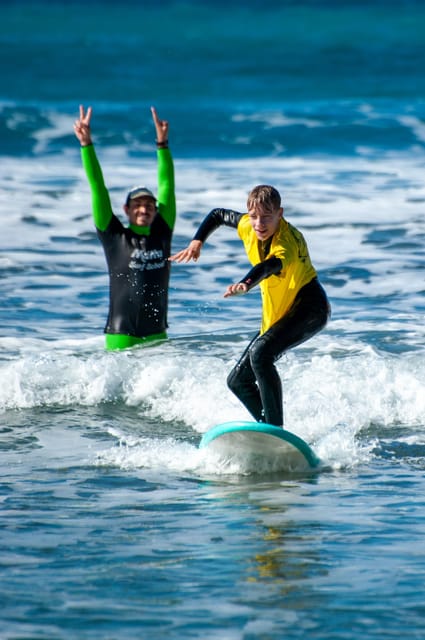
The first phase is short, but it sets the whole tone. You will get an introduction to the surfboard and the surf spot conditions. That usually includes basics like where to position yourself and what to do when you are not actively trying to stand yet.
Instructors also guide the session flow so you know what comes next. That matters more than beginners think. When you know the plan, you panic less, and you focus on one job at a time, paddling, timing, or popping up.
This is where you should lean into questions. The lesson is meant for first-timers, and staff are there to help you get moving safely. If you are nervous, that is normal. You are not expected to pretend you are fearless. You are expected to learn the steps in the right order.
It also helps that the instruction happens with small group attention. Max 6 participants means you are not competing for cues every few seconds.
Sand Practice That Builds Confidence, Standing Up Without Guesswork
Before you get into the water, you practice the critical parts on sand. This includes learning how to stand on the board and how to execute the correct take-off technique. Doing this on dry ground sounds simple, but it is a big deal for beginners.
Why? Because your body needs repetition before you add two harder variables: balance on a moving board and ocean timing. Sand practice lets you:
- learn your starting position
- rehearse your movement sequence
- build the muscle memory that keeps you from freezing once waves show up
This is also where you can measure how you learn best. Some people need to watch first, then try. Others need to try quickly, then refine. Since you are not yet in chest-deep water, you can experiment safely.
If you have ever tried to learn something technical while cold water is in the picture, you know what I mean. The sand stage makes the lesson feel more like learning and less like survival.
A different way to spend the day nearby:
- Comino: Blue Lagoon, Crystal Lagoon, and Seacaves Tour
★ 4.6 · 5,673 reviews - From Malta: Full-Day Gozo UTV Tour with Lunch and Boat Ride
★ 4.6 · 4,408 reviews - From Sliema: Gozo, Comino and Blue Lagoon Cruise
★ 4.5 · 3,461 reviews - Comino: Blue Lagoon & Caves Boat Cruise
★ 4.7 · 3,070 reviews
Moving Into Chest-High Water: Paddling, Catching Waves, Staying Safe
Once you are comfortable with the setup and sand moves, you head into chest-high deep water. The coaching shifts from technique drilling to real-time wave catching.
Instructors guide you through:
- paddling and positioning
- catching waves at the right moment
- getting tips while you try your first rides
- doing all of it in a safe environment
Chest-high water is not just “a little further out.” It is enough to feel like you are surfing, without being a total leap into advanced conditions. That is why this lesson works for beginners who want actual wave time, not just standing near the shoreline.
And since the school runs with helpers and instructors staying present throughout, you are not stuck figuring everything out alone. That support is a big part of why multiple people describe the staff as very helpful and attentive, taking time to teach properly instead of rushing.
Also, the coaching style matters. Clear, friendly instruction helps you correct small issues fast. If you are learning to pop up, half the battle is timing. The moment you are taught the right timing cue, everything clicks more quickly.
Weather-Dependent Surf: What Happens If Waves Do Not Cooperate
This surf school is upfront that activities are weather-dependent. That means your experience depends on real sea conditions, not just the calendar.
If the conditions mean there are no suitable waves, they offer alternatives such as:
- stand-up paddleboarding
- wakeboarding
- boat tours
It is a smart system, but you should plan for uncertainty. Bring a flexible mindset. This is also a good reason to schedule your lesson earlier in your trip, so you still have room to adjust if Mother Nature changes the plan.
One practical tip: if your lesson is weather-cancelled, ask what alternatives are available before you go off and make plans. When waves are not happening, the day is still meant to be active, just in a different format.
Price and Value: €60 for Gear and Coaching in a Small Group
You may see the price listed as $71 per person, while the lesson cost is stated as €60 per person for a 1-hour session with equipment included. Either way, the structure is what makes it feel fair.
The equipment part matters. The lesson includes a surfboard and a wetsuit. If you tried to rent gear separately before a class, costs add up quickly, and you end up spending time on rentals instead of learning.
The group size matters too. With up to 6 people, instructors can guide you in ways a large class cannot. That means you are more likely to get corrections while you are still learning, instead of just being observed.
For a first surfing attempt, this is the kind of value you want: enough instruction to make progress, enough structure to keep it safe, and equipment handled so you can focus on the waves.
Who This Is Best For, and Who Should Skip It
This lesson is designed for beginners, but not everyone is a fit. It is not suitable for:
- people with mobility impairments
- non-swimmers
- pregnant women
- children under 16
So if you are an experienced swimmer who wants to learn the mechanics, you are in the target zone. If you are still building comfort in open water, you should consider a different kind of lesson first, because this one moves into chest-high water.
Also, keep your expectations realistic. You are learning pop-up technique and wave catching in a single hour. You might get more than one ride, or you might just nail the setup and take-off timing and call it a win. Either is progress. The sand practice and coaching are there to help you move forward fast.
What to Bring, What to Wear, and What to Avoid
You do not need a surf wardrobe, but you should show up ready to be outside and in the water.
What to bring:
- sunscreen
- a bottle of water
- a towel
- change of clothes
- swimwear
What to wear depends on the season. The lesson notes suggest wearing a swimsuit or board shorts under the wetsuit in cooler weather. In warmer weather, you may use the school’s branded T-shirt instead. Either way, arrive prepared so the wetsuit part does not become a frantic scramble.
Also note what is not allowed: alcohol and drugs.
A practical comfort tip: bring something easy to dry and change into after. Saltwater plus sun can make you feel chilly even when the air is warm.
Instructor Languages: English, Italian, Spanish
Communication makes or breaks beginner lessons. This school lists instructors who speak English, Italian, and Spanish.
So if your comfort language is one of those, you should be able to follow safety guidance and technique cues without playing guessing games. And even if your surfing vocabulary is rusty, clear instruction helps you fix posture, timing, and paddle rhythm quickly.
Should You Book Malta Surf School Beginner Lessons?
Book this if you want a beginner-focused surf class with small group attention and a clear plan that starts on sand and builds into chest-high wave time. It is a great choice for your first attempt because you learn the pieces in order, and the coaching is hands-on.
Do not book if you are not comfortable with open water or you fall into the listed suitability limits. Also, only book if you can handle the weather factor. This is a realistic choice for adventurous travelers who do not mind a possible shift to stand-up paddleboarding, wakeboarding, or a boat tour when the sea does not cooperate.
Finally, think about timing. If you can schedule around good weather and still keep your day flexible, you maximize the chance that you actually get surfing waves, not just gear and practice.
FAQ
How long is the beginner surf lesson?
The beginner group lesson lasts 1 hour.
What is the maximum group size?
The group is limited to a maximum of 6 participants.
What is included in the lesson price?
The lesson includes beginner coaching, equipment (surfboard and wetsuit), and guided practice starting on the beach, then moving into chest-high deep water.
Where do I meet the surf school?
Meet at the end of the steps on the beach just next to Singita kiosk. Look for the surf school blue flag.
What should I bring?
Bring sunscreen, water, swimwear, a towel, and a change of clothes.
What should I wear under the wetsuit in cooler weather?
Wear a swimsuit or board shorts under the wetsuit in winter.
What happens if there are no waves?
Activities are weather-dependent. If there are no waves, the school offers alternative activities such as stand-up paddleboarding, wakeboarding, or boat tours.
Is the lesson refundable if it gets cancelled?
You can cancel up to 24 hours in advance for a full refund.
Are non-swimmers allowed?
No, the lesson is not suitable for non-swimmers.
What languages do the instructors speak?
Instructors speak English, Italian, and Spanish.
Just added to our Malta list
- Witchcraft and Blood in Birgu – Walking Tour★ 4.7 · 3 reviews
- World War II Malta Full-Day Walking Tour★ 4.3 · 18 reviews
- Gozo Full-Day Group Coach Tour including Lunch and Transfers★ 4.3 · 7 reviews
- Gozo: Wine Tasting and Paired Dinner Experience★ 4.9 · 43 reviews
- Vintage Bus Tour: Aviation Museum & Mosta Church inc Platter★ 4.3 · 20 reviews
- Visit Tarxien Temples, Kalanka Bay, Blue Grotto, Marsaxlokk★ 3.9 · 13 reviews
- Wakeboarding Adventure in Malta: Learn to Ride★ 5.0 · 4 reviews
- Valletta: Street Food Walking Tour with a Local★ 4.9 · 15 reviews
Workshops, compared.




Maltese Tile – Souvenir painting workshop with local
Read our review →Browse the lists this tour appears in