
REVIEW · MALTA
Malta Multi Pass
This pass turns Malta into bite-size days, not big stress. I love the unlimited hop-on hop-off buses for fast orientation, and I also love the Captain Morgan harbour cruise for unforgettable views from the water. One real drawback to plan for is that QR access and bus timing can get messy, especially if you wait too long to activate and rely on the big bus for every connection.
Malta’s compact, so you can stack archaeology and museums without racing your whole day. If you pick the longer options, you get multiple UNESCO temple sites and a lot of Valletta and Three Cities sights in a single rhythm of repeats, breaks, and reschedules.
I think the best match is your first or second time in Malta, or if you want a self-guided plan that still feels well covered. Just don’t assume every ride runs like clockwork, and keep a Plan B for temples outside the center.
In This Review
- Key things I’d pay attention to
- How the Malta Multi Pass actually works
- Valletta from the water: Captain Morgan’s Grand Harbour Cruise
- The Two Islands sea day: Comino Blue Lagoon and Gozo
- CitySightseeing Malta buses: north and south routes without the guesswork
- Ħaġar Qim and Mnajdra: UNESCO temples you can read with your eyes
- Malta’s bigger prehistoric circuit: Borġ in-Nadur, Ta’ Ħaġrat, Skorba, and Tarxien
- St Paul’s Catacombs, Għar Dalam, and Ta’ Bistra: three ways to time-travel
- Knights, forts, and Siege-era storytelling in Valletta and the Three Cities
- Birgu’s Inquisitor’s Palace and the Maritime Museum
- Roman home life at Domus Romana
- Museums for every mood: archaeology, baroque art, science, and sea creatures
- Mdina Cathedral Museum and the things that make Mdina feel special
- Gozo add-on day: when you want a second island without doubling the planning
- Price and logistics, with the value math that makes sense
- Should you book the Malta Multi Pass?
- FAQ
- Do I get entry to all museums and sites listed?
- How do I use the pass at attractions?
- Are the cruise and bus audio in English?
- Is the Comino and Gozo ferry day included on every pass length?
- How long is the Grand Harbour cruise?
- Does the Blue Lagoon stop include free time?
- Does the pass include Gozo sightseeing by bus?
- Are food and drinks available on the cruises?
- Is there WiFi on the harbour cruise?
- Is this pass refundable if I cancel?
Key things I’d pay attention to
- Unlimited Malta sightseeing buses across the north and south routes, starting at Valletta Harbour
- A 90-minute Grand Harbour cruise on an eco-friendly catamaran, with live commentary in English and German
- Comino Blue Lagoon and Gozo ferry day included on 4-day and 7-day packages, with real free time on the islands
- UNESCO megalith temples like Ħaġar Qim and Mnajdra, plus other major temple complexes on longer passes
- Scan-and-go admission into many Heritage Malta sites, with a QR code used for single entry
How the Malta Multi Pass actually works
This is a multi-day, self-guided pass. Once you activate your pass for the number of consecutive days you chose, you can scan it for single entry at each included site. The key is that it is not a guided bus tour with a group moving together. It is more like a permission slip that lets you skip individual ticket purchases across a wide menu.
Where it feels smart is how Malta’s geography lines up with the included formats. Valletta is dense and walkable, the Three Cities are close by, and then you have one big sea day to Comino and Gozo. Add a hop-on hop-off bus for the long hops and you can build a sensible itinerary without overthinking every leg.
One practical tip I’d follow: save your access info on your phone and take a screenshot. When signals act weird or you lose the email thread, having a local copy helps you keep moving.
Other Malta trips people book alongside this one:
- Malta: Gozo & Comino Islands, Blue Lagoon & Seacaves Tour
★ 4.5 · 15,672 reviews - Sliema: Cruise to Comino, Crystal Lagoon, and Blue Lagoon
★ 4.5 · 6,855 reviews - Malta: Gozo, Comino & Blue Lagoon Cruise – swim & sightsee
★ 4.7 · 6,564 reviews
Valletta from the water: Captain Morgan’s Grand Harbour Cruise
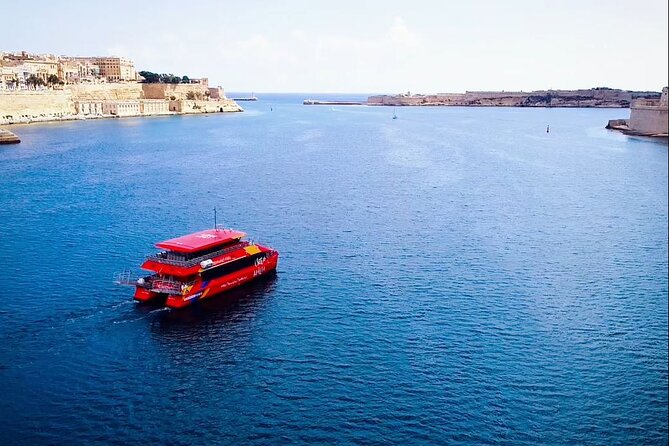
The harbour cruise is one of the best ways to reset your bearings in Malta. You’re on a 90-minute eco-friendly catamaran ferry, and the route covers Grand Harbour and Marsamxett Harbour, with views of Valletta, the Three Cities, and the forts that control both sides.
What makes it more than a “pretty boat ride” is the live commentary in English and German tied to major moments like the Great Sieges of 1565 and 1942. You’ll see fortifications, battlements, creeks, and skylines from the sea, and it’s a natural photo session because the angles are totally different from street level.
Comfort details matter on this one. You can choose outdoor seating or sit inside where you get air-conditioning. There’s also free WiFi and restroom facilities onboard. Food and drinks are available to buy via vending machines, so you do not need to pack a full meal.
If you are the kind of traveler who loves history but hates standing in crowds for hours, this cruise is a nice trade: less time waiting, more time looking.
The Two Islands sea day: Comino Blue Lagoon and Gozo
If your pass includes it, the Comino and Gozo ferry day is where the Malta Multi Pass starts to feel like a bargain. This is a full-day structure, about 8 hours, on a modern eco-friendly catamaran (33 metres) running from Sliema or Bugibba year-round.
You get free time on Comino’s Blue Lagoon, famous for its turquoise, clear water. Then you board again either at Comino’s Blue Lagoon or Gozo to return to Malta. During the day, additional ferries run between Comino and Gozo, so you can adjust your island order and the split of time.
Onboard, you’ve got the same practical comfort setup: outdoor and indoor (air-conditioned) seating, plus toilets. There’s a cash bar for drinks and snacks. Plan to bring swim gear and something to protect you from sun because you’ll be spending hours in the open.
This is included on the 4-day and 7-day options as a round trip. If you’re choosing a shorter pass, don’t assume this sea day is part of it.
CitySightseeing Malta buses: north and south routes without the guesswork
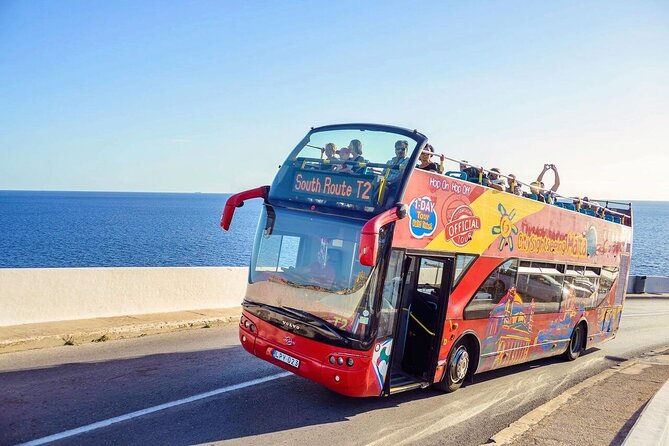
The hop-on hop-off portion is your “move across Malta without a taxi” backbone. CitySightseeing Malta runs north and south open-top routes, with a choice of multi-lingual commentary channels (12+), and hop on hop off access at the stops on either route.
Both routes start from Valletta Harbour and connect a lot of the big-name highlights, including:
- Mdina (Historic City)
- Ta Qali Crafts Village
- Mosta
- The Three Cities (Vittoriosa, Cospicua, Senglea)
- Marsaxlokk (fishing village)
- Valletta city centre
- San Anton Presidential Gardens
There’s also a “seasonal” mention for the Blue Grotto at Wied iz-Zurrieq, which runs April to October. If that’s on your list, build it into your days when it is actually offered.
Here’s the main consideration: Malta traffic can be slow, and that can turn a hop-on hop-off system into a hop and wait situation. I’d use the bus to get to your first major stop, then rely on walking or local buses for the rest when timing is tight. One smart backup is having a local bus plan in mind, so you are never trapped at the mercy of a single line.
A different way to spend the day nearby:
- Comino: Blue Lagoon, Crystal Lagoon, and Seacaves Tour
★ 4.6 · 5,673 reviews - From Malta: Full-Day Gozo UTV Tour with Lunch and Boat Ride
★ 4.6 · 4,408 reviews - From Sliema: Gozo, Comino and Blue Lagoon Cruise
★ 4.5 · 3,461 reviews - Comino: Blue Lagoon & Caves Boat Cruise
★ 4.7 · 3,070 reviews
Ħaġar Qim and Mnajdra: UNESCO temples you can read with your eyes
If you choose the 6-day or 7-day coverage, you get direct access to Ħaġar Qim and Mnajdra UNESCO temples. These are among the places where Malta feels ancient in the best way, because the architecture connects to the sky.
At Ħaġar Qim, the temple sits on a hilltop overlooking the sea and the islet of Filfa. Archaeology dates the remains to a range between 3800 and 2200 BC, with major construction in the Ġgantija phase. You’ll see a central building and at least two other structures, including some of the largest megaliths in use, like a 5.2 metre stone and an estimated 20-tonne megalith.
The layout uses C-shaped rooms with apses, and there’s even an elliptical hole aligned for the Summer Solstice sunrise. A dedicated visitor centre adds interactive information, which is helpful if megalith logic is not your daily hobby.
Mnajdra sits on Malta’s south coast with sweeping views toward the isle of Fifla. This site has three main buildings facing a common oval forecourt. The oldest structure traces to the Ġgantija phase, while the South Temple relates to the early Tarxien phase. The Central Temple was the later one.
What really pulls you in is the way the doorway and decorated blocks connect to seasonal sun events. The site marks solstices and equinoxes through the rising sun alignment. If you enjoy “why is it shaped that way” questions, this is your answer in stone.
Expect about an hour at each site. Go earlier in the day if you can, because the views are best when the light feels crisp.
Malta’s bigger prehistoric circuit: Borġ in-Nadur, Ta’ Ħaġrat, Skorba, and Tarxien
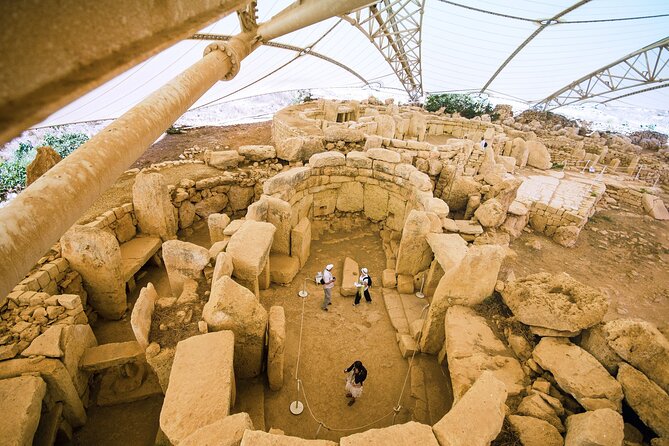
These temple complexes make a great “one theme, multiple stops” day, especially on longer passes. You’re looking at a mix of well-preserved structures and different angles on daily life, not just one masterpiece.
Borġ in-Nadur is high between two valleys above St. George’s Bay near Birżebbuġa, and it is only about 500 metres from Għar Dalam. It spans multiple eras, including the late Temple Period and the Bronze Age. It was excavated in the 1920s by archaeologist Margaret Murray, and the four-apsed temple with its enclosed area gives you a feel for how people organized space and ritual.
Ta’ Ħaġrat is in Mġarr and known for a monumental doorway and facade built entirely of local Upper Coralline Limestone. The site has a bench along the facade’s length and a courtyard with a raised stone kerb. It is made for a slow walk, because the design is easy to miss when you rush.
Skorba, also near Mġarr, is especially interesting because it gives evidence about domestic life. That means you get ruins that hint at how the temple builders and their households might have lived. You’ll see two megalithic structures, with one dating to the earliest Ġgantija phase and the other later to the Tarxien phase, plus remains of domestic huts.
Tarxien Temples take you into a multi-structure complex built between 3800 and 2200 BC, and later reused between 2400 and 1500 BC. The South Temple is the most decorated, with relief sculpture and the lower part of a colossal statue of a skirted figure. There are cremation traces in the centre of the South Temple, showing reuse as a Bronze Age cremation cemetery. There is also an elevated walkway for a different viewpoint over the remains.
If you want one practical “avoid regret” move, cluster these on the same day you use your most reliable transport. You’ll thank yourself later when you are not juggling buses and sunburn at the same time.
St Paul’s Catacombs, Għar Dalam, and Ta’ Bistra: three ways to time-travel
Malta’s underground sites deliver a different kind of wow. Here you’re not only looking at stonework. You’re stepping into burial landscapes and deep-time natural history.
St Paul’s Catacombs are on the outskirts of the old Roman city Melite, now Mdina. Roman law prohibited burials within the city, so this became a burial ground used from Punic and Roman times up to the 7th century. You’re walking through interconnected underground Roman cemeteries with 30-plus hypogea. The main complex covers over 2000 square metres and includes halls with Doric-like pillars and Agape triclinia tables used for commemorative meals.
Għar Dalam is Malta’s oldest prehistoric site. If you like science-y details, it’s a great stop: you’ll see animal bones from the cave, including small-sized elephants and hippopotami. The site highlights layers like the Hippopotamus Layer, deposited about 500,000 years ago, and the Cultural Layer with earliest evidence of human presence around 7,400 years ago. There’s also a garden of indigenous plants, which makes the visit feel more complete.
Ta’ Bistra Catacombs sit between ancient Melite and the old harbour of Salina. This is the largest set of tombs and catacombs accessible beyond the ancient city area. The site was first recorded in the late 1800s, investigated in 1933 by Captain Charles Zammit, then partly covered by a road leading down to Burmarrad. Later studies in 2004, 2013, and 2014 brought new discoveries back into the spotlight.
Each is around an hour, and each has a different emotional tone. If you do them in the right order, you get a satisfying story arc from deep prehistory to human ritual.
Knights, forts, and Siege-era storytelling in Valletta and the Three Cities
If you want Malta’s “big moments” in one pass, focus on the fort and palace cluster.
The Grand Master’s Palace State Rooms and Armoury are the classic Knights-era stops. The Armoury is where you see how armor functioned as both protection and status, with lavishly decorated pieces tied to Grand Masters like Alof de Wignacourt and Jean de La Valette. You can also see Ottoman artefacts connected to the Great Siege of 1565.
One note: the State Rooms are temporarily closed until further notice. If that matters to you, still visit what is open, and lean on the other siege and fort displays in Valletta and around the harbours.
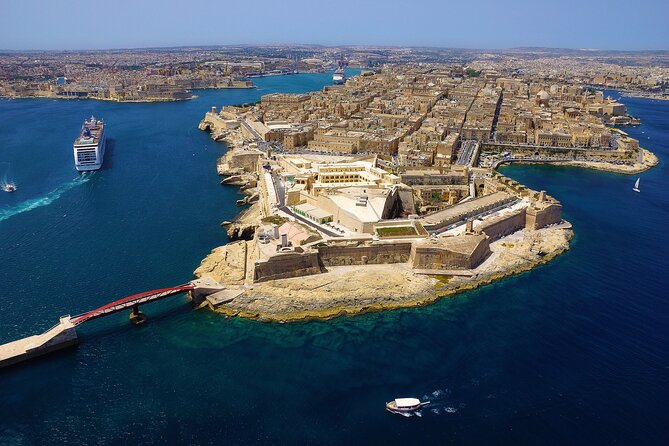
Fort St Angelo dominates Grand Harbour from a hillock. Whoever controlled it controlled Malta’s direction. After 1530, the Order of St John turned it into their headquarters, and it played a major role during the Great Siege of 1565. Later, the Royal Navy moved its command hub there between 1906 and 1979, and during World War II it was activated again against Axis air raids. Today, you get panoramic views and immersive displays plus artillery examples.
For another strong siege stop, look at Fort St Elmo. It is star-shaped, built by the Order of St John in 1552, and staged to face Ottoman attacks. It hosts the National War Museum with artefacts reaching back to prehistoric times. You’ll see military armor from the Order of St John and Ottoman Turks, plus items like the Gloster Sea Gladiator N5520 FAITH, Roosevelt’s Jeep Husky, and Malta’s George Cross award.
If you like a single day where you can move from one viewpoint to another, these forts do that job extremely well.
Birgu’s Inquisitor’s Palace and the Maritime Museum
Two stops that work well together if you enjoy power, daily life, and Malta as a sea nation.
The Inquisitor’s Palace in Birgu is one of the few surviving buildings of its kind. It was used across centuries by high-ranking officials representing major powers, which helped it survive when many other structures did not. You can explore reconstructed spaces, including areas like the domestic kitchen, the piano nobile ambience, private quarters, the Holy Office Tribunal setting, and the prison complex and torture chamber. It also houses the National Museum of Ethnography with permanent displays on Malta’s religious traditions shaped by the Inquisition.
Then turn to the Malta Maritime Museum in the Old Naval bakery. This museum traces Malta’s maritime story across 7000 years and includes a collection of more than 20,000 artefacts. It’s a “big idea” museum that still feels personal because you meet specific objects, including the largest known Roman anchor, the earliest known ex-voto, the largest ship model belonging to the Order of St John, the largest collection of cannons on the island, and the Napoleonic figurehead of HMS Hibernia. There’s even a 1950s working marine steam engine and a collection of over 60 boats.
If you want one day to feel like Malta is both ancient and international, these two deliver it.
Roman home life at Domus Romana
Domus Romana is a quieter, more “how people really lived” stop. You get a glimpse into the private life of a Roman aristocrat through mosaics and household artefacts. The museum display guides you through Roman family roles, fashion, education, entertainment, and food and drink.
The standout detail is a set of marble statues portraying Emperor Claudius and his family, presented in a private house setting. In the Roman world, those artworks were typically seen in public spaces, so seeing them in this context changes how you picture the home.
It is a good option on a day when you have already done lots of outdoor light and you want something more indoor and focused.
Museums for every mood: archaeology, baroque art, science, and sea creatures
This is where the pass helps you avoid choosing between “history days” and “kid-friendly breaks.”
In Valletta, you can access multiple museums depending on the pass length. The National Museum of Natural History sits in the Auberge de Provence and is a seriously decorated Baroque building. You’ll see highlights tied to Malta’s timeline from Neolithic to Phoenician periods, including the Sleeping Lady from Ħal Saflieni Hypogeum, the Venus of Malta from Ħaġar Qim Temples, Bronze Age daggers from Tarxien Temples, and the Horus and Anubis pendant. The Gran Salon is part of the draw because the building itself carries the visual drama.
MUZA, the Malta National Community Art Museum, is different. It’s set up around stories in themes like The Mediterranean, Europe, Empire, and The Artist, and it mixes old masters with contemporary works in a way that can feel more like modern installation thinking than traditional museum separation. If you like art museums that do not just march chronologically, it is a refreshing stop.
For the “get your bearings fast” story of Malta, the Malta Experience audio-visual show runs about 45 minutes and covers 7000 years of history in 17 languages. It is held in what was originally the Holy Infirmary of the Knights of St John, in a panoramic theatre setup.
If you prefer something guided, La Sacra Infermeria is a professional guided tour in English. It focuses on how the Knights began with caring for the sick, and how the infirmary evolved over centuries. The Great Ward is the headline room at 155 metres long with a timber ceiling, described as the longest hospital ward in Europe. During World War I, the islands became known as Nurse of the Mediterranean due to the influx of sick and wounded.
For science breaks, Esplora Interactive Science Centre at Bighi is a hands-on style venue with 200-plus exhibits and an Activity Centre for workshops and shows. The planetarium has a 10.7 metre diameter structure and a Colour space 4K theatre system for full-dome planetarium and presenter-led visualizations.
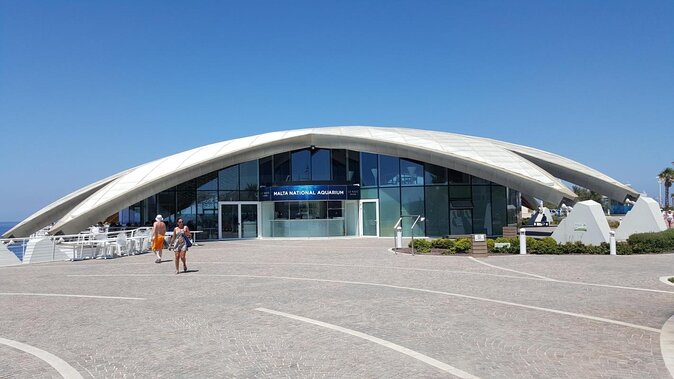
If you want something playful without feeling like you left “real Malta” behind, the National Aquarium in St. Paul’s Bay is included on the right pass lengths. It has 41 tanks, including a large main tank with fish from the Indian Ocean like sharks and rays, plus a glass tunnel. Outside there’s a landscaped promenade and a play area, with views toward St. Paul’s Islands.
Mdina Cathedral Museum and the things that make Mdina feel special
Mdina is a different pace from Valletta, and the pass gives you access to St Paul’s Cathedral and its adjacent museum on the 7-day option.
In St Paul’s Cathedral, you can see the marble-inlaid floor, frescoed ceiling, and lots of art and silver elements. It also connects to the story of St Paul, shipwrecked on the island, and to Publius, who lived in the governor’s residence when appointed as the first bishop.
The Mdina Cathedral Museum pairs nicely with the cathedral, with collections that include fine silverware, rare coins, prints and engravings by Albrecht Dürer, and other art and artefacts. It is an easy way to understand why people love this walled city vibe so much.
Gozo add-on day: when you want a second island without doubling the planning
Gozo is included through an optional 1-day Gozo Heritage add-on that comes with 4-day and 7-day passes.
You can use a CitySightseeing Gozo hop-on hop-off bus on two routes. Route 1, the purple route, starts at the Mġarr Ferry Terminal and continues through stops such as Xewkija, Savina Creativity, Victoria (for Dwejra), Ta’ Dbiegi, Dwejra, Ta’ Pinu (photo stop), Fontana Cottage, and Xlendi. Route 2, the blue route, covers Victoria again, then Marsalforn, Ġgantija Temples, Ramla, Nadur, and back to the ferry terminal.
The heritage add-on also includes shorter visits to a variety of Gozo sites. These are typically 20 to 25 minutes each, which means you can pack a lot without losing the feel of exploring.
You can include:
- Gozo Museum of Archaeology, with sections from prehistory to the classical period and then mediaeval and early modern periods
- Gozo Nature Museum, featuring fossils, insects and local ecosystems, plus the moonstone details tied to Apollo II and a moonstone donation story
- Gran Castello Historic House, a reconstructed historic house setup with spaces for serving personnel, plus domestic craft context
- Cittadella Visitors’ Centre with interactive touch screens and an 8-minute surround theatre video
- Ġgantija Archaeological Park, UNESCO temples that are over 5500 years old
- Ta’ Kola Windmill, one of the surviving Knights period windmills with its wooden milling mechanism and original circular grinding stones
- Old Prison in Victoria, with cell galleries and historic graffiti casts
This Gozo add-on is the best fit if you want the highlights of the sister island but do not want to build an entire separate day plan.
Price and logistics, with the value math that makes sense
At about $88.72 per person, the pass becomes worth it when you actually use enough of the included categories. The biggest money savers tend to be the items you’d otherwise buy separately: the sightseeing bus access, museum admissions across multiple venues, and especially the sea day to Comino and Gozo on the 4-day and 7-day options.
One note from real-world use: the hop-on hop-off bus can be slow due to traffic. If you only ride it for a single stop, you may still feel like you could have done it another way. On the other hand, if you plan to hit multiple stops per day, it helps you keep momentum.
Also, check what is temporarily closed. The Grand Master’s Palace state rooms are listed as temporarily closed until further notice, and the Fortress Builders Interpretation Centre is also marked temporarily closed. If either of those is a top priority, build a backup plan around the forts and other palace and museum options that are available.
Finally, if you are a temple superfan, do not assume everything UNESCO is covered. Ħal Saflieni Hypogeum is not covered in this pass and typically needs separate tickets and advance reservations, so you will want to handle that separately if it’s on your must-do list.
Should you book the Malta Multi Pass?
Book it if you want a value-driven, flexible way to cover Malta’s big categories in a short time. It works especially well if you plan to do at least a couple of Heritage Malta sites plus the harbour cruise, and if you choose the 4-day or 7-day option, the Comino and Gozo ferry day can tip the math toward a clear win.
Skip it or plan carefully if you hate uncertainty. If you depend on the hop-on hop-off bus to get you everywhere at exact times, traffic can throw off your day. In that case, build your plan around walking and stop using the bus as your only transport lifeline.
FAQ
Do I get entry to all museums and sites listed?
You get access to specific included admissions, with scanning for single entry at each attraction included in your selected pass length. Some sites may be temporarily closed.
How do I use the pass at attractions?
You scan your multi-day pass for admission at each included site. It is single entry per attraction.
Are the cruise and bus audio in English?
The Grand Harbour cruise includes live commentary in English and German. The CitySightseeing buses include 12+ multi-lingual commentary channels.
Is the Comino and Gozo ferry day included on every pass length?
No. The Two Islands ferries to Comino Blue Lagoon and Gozo are included on the 4-day and 7-day pass options.
How long is the Grand Harbour cruise?
The Captain Morgan Malta Harbour Cruise is about 90 minutes.
Does the Blue Lagoon stop include free time?
Yes. You get free time on Comino to swim, sunbathe, relax, or explore independently.
Does the pass include Gozo sightseeing by bus?
You can add a 1-day Gozo Heritage experience with City Sightseeing Gozo hop-on hop-off buses when you have the 4-day leisure+ or 7-day premium pass.
Are food and drinks available on the cruises?
Yes. There are vending machines on the Grand Harbour cruise, and a cash bar is available on the Two Islands catamaran.
Is there WiFi on the harbour cruise?
Yes. The Grand Harbour cruise includes free WiFi.
Is this pass refundable if I cancel?
Yes. You can cancel up to 24 hours in advance for a full refund, and weather conditions can affect whether an experience date is offered.
Just added to our Malta list
- Witchcraft and Blood in Birgu – Walking Tour★ 4.7 · 3 reviews
- World War II Malta Full-Day Walking Tour★ 4.3 · 18 reviews
- Vintage Bus Tour: Aviation Museum & Mosta Church inc Platter★ 4.3 · 20 reviews
- Gozo Full-Day Group Coach Tour including Lunch and Transfers★ 4.3 · 7 reviews
- Gozo: Wine Tasting and Paired Dinner Experience★ 4.9 · 43 reviews
- Visit Tarxien Temples, Kalanka Bay, Blue Grotto, Marsaxlokk★ 3.9 · 13 reviews
- Wakeboarding Adventure in Malta: Learn to Ride★ 5.0 · 4 reviews
- Valletta: Street Food Walking Tour with a Local★ 4.9 · 15 reviews