
REVIEW · WALKING TOURS
Discover Valletta Half-Day Walking Tour
Valletta looks good on a tight schedule. In 3 hours 15 minutes, this half-day group walk strings together City Gate, palaces, viewpoints, and fortress walls, with a guide who helps you make sense of what you’re seeing. I like that it keeps the cost down with a group tour, without skipping the big-name sights like St. John’s Co-Cathedral.
Two things I especially liked: the sweep of Upper Barrakka Gardens views, and the planned 45 minutes at St. John’s Co-Cathedral so you can choose your level of ticketed time. The one possible downside is that the pace is brisk, and if your tour runs in two languages, you may get less detailed explanations than you hoped.
In This Review
- Key highlights you will feel on day one
- Meeting at the Phoenicia Malta, finishing near the harbor
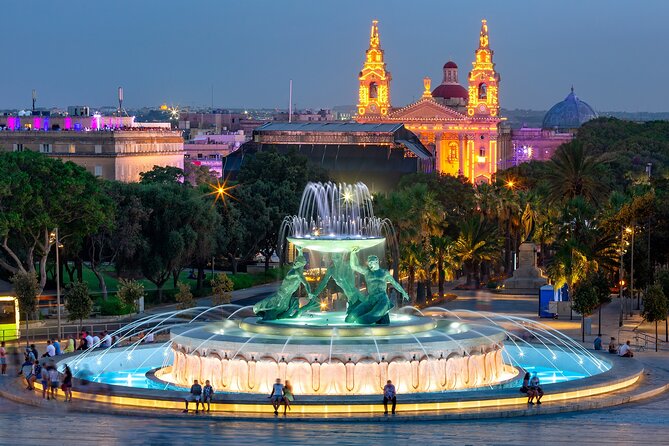
- Valletta’s “quick start” at Triton Fountain and City Gate
- Republic Street moments: New Parliament and the opera-house ruins
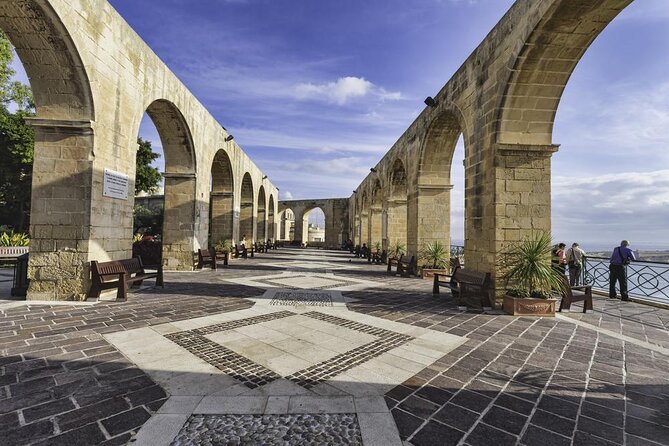
- Auberge de Castille and Upper Barrakka Gardens: power at the top, views at the walls
- MUŻA in Auberge d’Italie and Napoleon’s stay at Palazzo Parisio
- St. John’s Co-Cathedral: your 45 minutes are the deciding factor
- Grandmasters’ Palace and St George’s Square, right in the political heart
- Fort St Elmo and the National War Museum: Siege themes at the seaward edge
- The Malta Experience at 13:00: a good wrap if you want one last story beat
- Price, value, and ticket budgeting for a half-day
- Pacing, guide quality, and what to do if you want more detail
- Who should book this Valletta half-day walk
- Should you book this Valletta Half-Day Walking Tour?
- FAQ
- What time does the tour start and how long is it?
- Where is the meeting point and where does the tour finish?
- Is admission to St. John’s Co-Cathedral included?
- Which parts are free during the walking tour?
- What languages does the guide speak?
- Is free cancellation available?
Key highlights you will feel on day one
- A practical, half-day route that stays under 3 hours while still covering the core of Valletta
- Renzo Piano’s mark in Valletta’s modern era, from the New Parliament to opera-house ruins
- Free stops that actually matter, including City Gate and Upper Barrakka Gardens
- A real decision point at St. John’s Co-Cathedral, with 45 minutes of time on your own
- A strong finale option at the Malta Experience show at 13:00
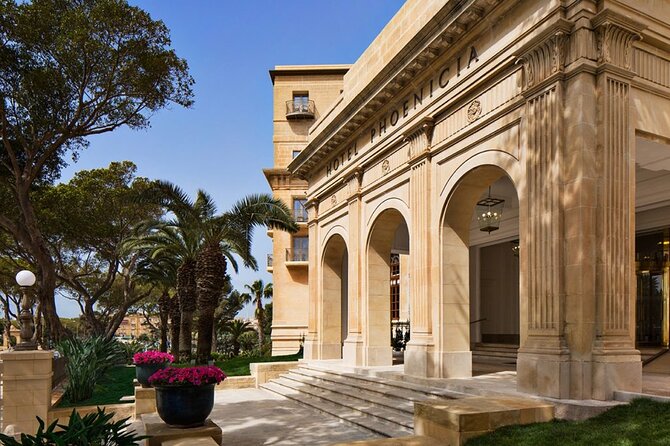
Meeting at the Phoenicia Malta, finishing near the harbor
The tour starts at 9:15 am at The Phoenicia Malta, The Mall, Floriana. That’s a good setup if you’re already in the Valletta-Floriana area, and you won’t need a hotel pick-up. The meeting point is meant to be easy to find, and the tour includes a mobile ticket, so you should not be scrambling for paper confirmations.
You finish at 12:45 pm at the Malta Experience entrance, St Elmo Bastions, Valletta. From there, you can either buy tickets for the 45-minute Malta Experience show at 13:00 or just take your time with a drink and something to eat overlooking the Grand Harbour. Then the rest of the day is yours, which is perfect if you want to come back later for photos or a second round through the streets.
A few more Malta options worth comparing
- The Original Valletta Walking Tour
★ 5.0 · 2,719 reviews - Valletta: 3-Hour Walking Tour
★ 4.7 · 2,219 reviews - Valletta: Guided City Walking Tour
★ 4.8 · 1,256 reviews
Valletta’s “quick start” at Triton Fountain and City Gate
The walk begins with the Triton Fountain just outside Valletta’s City Gate. It’s a Modernist landmark from 1959, and it was restored in 2018, which gives you a nice reminder that Valletta is not only old stone. Even from the outside, the design helps you orient yourself right away, because it sits right at the city’s threshold.
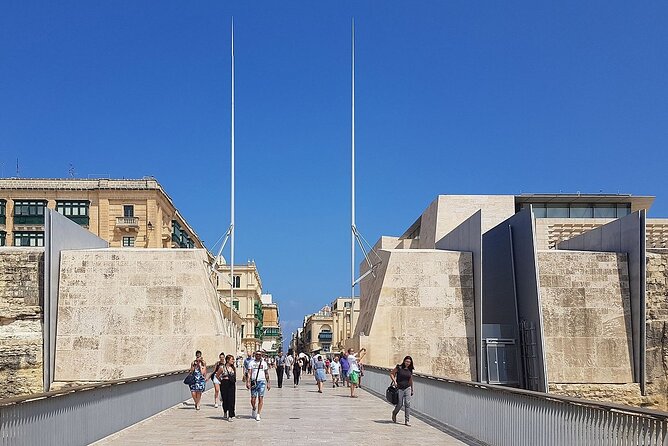
From there, you hit Valletta City Gate in the Porta Reale Curtain. This gate marks the start of Republic Street, Valletta’s main drag that runs toward Fort Saint Elmo. The current gate is the fifth one on this exact spot, completed in 2014 to designs by Renzo Piano. The best part of this stop is the angle it gives you: you can look along Republic Street and already understand how Valletta’s layout funnels you toward the waterfront. City Gate is listed as free, so you get a big payoff without adding tickets early.
Republic Street moments: New Parliament and the opera-house ruins
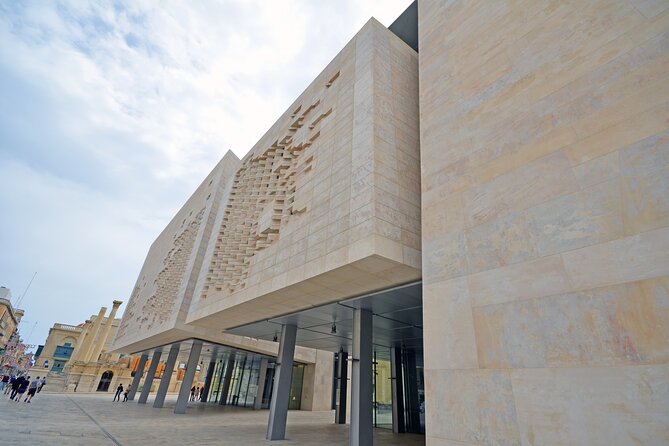
As you continue, you pause near the New Parliament, a building constructed between 2011 and 2015, also designed by Renzo Piano. What I like here is the concept behind it: a steel frame clad in Gozitan limestone meant to resemble honeycombs. It’s a clever nod to the idea that Malta’s name ties to Melite, meaning honey. If you’re tired of seeing only medieval or baroque, this is a welcome course-correct in the walking route.
Next comes the Royal Opera House site, which is one of the most emotional “pause and look” stops. The original opera house was completed in 1866, then received a direct aerial bombing hit in 1942 during World War II. The ruins were later redesigned by Renzo Piano, and in 2013 they started functioning again as a performance venue. Even if you do not go inside anything, the stop works because it connects modern Valletta to the scars and comebacks of the 20th century.
Auberge de Castille and Upper Barrakka Gardens: power at the top, views at the walls
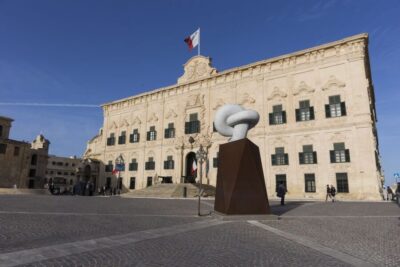
At the highest point of Valletta, you get a close look at Auberge de Castille, also called Castile Palace. Built in the Baroque style under Manuel Pinto da Fonseca in the 1740s, it replaced an earlier 1574 building meant for knights from the Order of Saint John representing the langue of Castile, León, and Portugal. Today, it houses the Office of the Prime Minister of Malta, so this stop is not just about old architecture. It is about how those old stones still hold real civic weight.
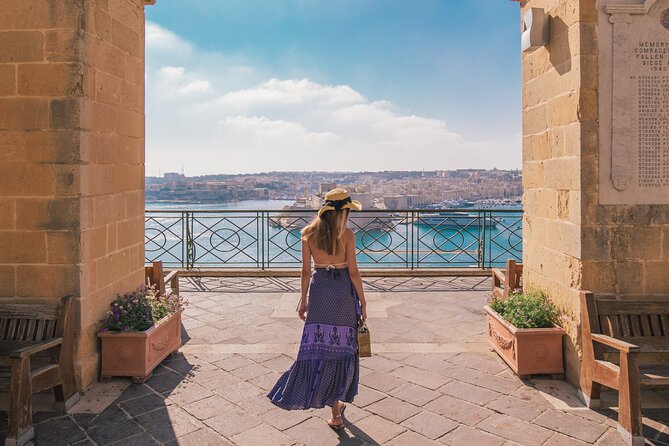
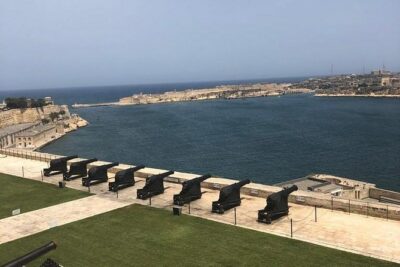
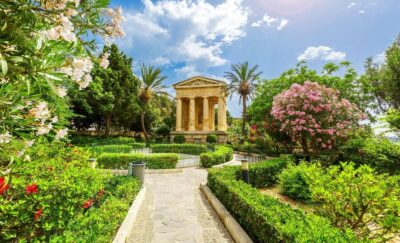
Then you move to Upper Barrakka Gardens, where the main gift is time plus height. You get around 15 minutes of free time to enjoy the Grand Harbour view, with sightlines that reach over the Three Cities and the shipyard area, plus the lower parts of the capital. These gardens sit on the upper tier of St. Peter and Paul Bastion, built in the 1560s, originally for recreation for the knights. It’s one of the rare stops where the tour gives you permission to slow down, look out, and take photos without feeling like you are always rushing to the next corner.
A different way to spend the day nearby:
- Malta: Gozo & Comino Islands, Blue Lagoon & Seacaves Tour
★ 4.5 · 15,672 reviews - Sliema: Cruise to Comino, Crystal Lagoon, and Blue Lagoon
★ 4.5 · 6,855 reviews - Malta: Gozo, Comino & Blue Lagoon Cruise – swim & sightsee
★ 4.7 · 6,564 reviews - Comino: Blue Lagoon, Crystal Lagoon, and Seacaves Tour
★ 4.6 · 5,673 reviews
MUŻA in Auberge d’Italie and Napoleon’s stay at Palazzo Parisio
A short walk later, you reach Auberge d’Italie. Built in the late 16th century for knights from the langue of Italy, this building became the National Art Museum (MUŻA) in 2018. Even if you do not plan museum time, the stop is useful because it helps you connect the medieval-knight world to modern cultural life. It’s a reminder that Valletta repurposes buildings well instead of freezing them in time.
Then the tour pauses at Palazzo Parisio. This one is a great story stop: built in the 1740s by Domenico Sceberras, later passed through the Muscati and Parisio Muscati families, and it served as Napoleon’s residence for six days in June 1798 during the early days of French occupation. Later, the government used it as the General Post Office from 1886 to 1973, then the Ministry for Agriculture, and now it houses the Ministry for Foreign Affairs. If you like your city visits to include political power, this part delivers.
St. John’s Co-Cathedral: your 45 minutes are the deciding factor
The tour gives you its most flexible block at St. John’s Co-Cathedral and Museum, with 45 minutes of free time. The key detail is that entrance is not included, so you choose how far you want to go. During that time, you can buy tickets for the cathedral and museum, including access to the Oratory with Caravaggio masterpieces, plus Flemish tapestries and the church museum. The marble inlaid floor is also part of what visitors tend to prioritize, and the entrance includes a multilingual audio guide.
Even if you decide not to purchase tickets right then, the 45 minutes still helps you do something valuable: use the cathedral area as a calm anchor point in the middle of a fast tour. I suggest having a simple plan, either tickets immediately or a quick exterior look and a walk back to the high street for context. You also have the option to shop or relax in Republic Street or Republic Square while you wait for the agreed rejoin time. Then you get back on track for the last stretch.
Grandmasters’ Palace and St George’s Square, right in the political heart
You reach St. George Square, also known as Palace Square, at the heart of Valletta. This is the largest and most prominent square, located in front of the Grandmasters’ Palace. The square has changed in appearance since the 17th century, but it has stayed important as a venue for major occasions and celebrations. It’s the kind of place where you can stand for a minute and feel how the city used to gather its power and pageantry in one open space.
Next is the Grandmaster’s Palace. Officially called The Palace, it was built between the 16th and 18th centuries as the residence for the Grand Master who ruled Malta. The palace later served as the seat of the Parliament of Malta from 1921 to 2015. Today it houses the Office of the President of Malta, plus the Palace State Rooms and the Palace Armoury as a museum (admission not included on the tour). Even without buying a ticket, the stop is useful because it connects your earlier knight-themed auberges to the biggest center of government in the city.
Fort St Elmo and the National War Museum: Siege themes at the seaward edge
From the political center, the walk turns toward the sea with Fort Saint Elmo. This star fort sits on the seaward shore of the Sciberras Peninsula, dividing Marsamxett Harbour from Grand Harbour, and it helps command the entrances to both harbors along with Fort Tigné and Fort Ricasoli. If you like military architecture, the star fort shape is the point here, and it also frames the harbor in a different way than the gardens did.
Fort Saint Elmo is best known for its role in the Great Siege of Malta in 1565. Since 1975, part of the fort has housed the National War Museum. The tour stop itself is brief, so treat it as a guided orientation moment. Entrance to anything inside is listed as not included, so if you want to go further, you can decide based on your energy level and how much you want to spend.
The Malta Experience at 13:00: a good wrap if you want one last story beat
The tour ends at 12:45 pm at the entrance of the Malta Experience. If you want an easy finale, you can purchase tickets to watch the 45-minute multilingual audio-visual show that starts at 13:00. This is not a walk-about museum stop. It is a show format, and that can be perfect right after a lot of outdoor sights, especially if you need a break from sun, wind, or stairs.
The Malta Experience area also gives you the chance to relax with a drink and something to eat, overlooking the Grand Harbour. Those extras are not included, but the idea is straightforward: you finish the walking portion, then either go into the show or simply enjoy the view and call it a day. Either way, you control your pacing for the rest of the afternoon.
Price, value, and ticket budgeting for a half-day
At $22.11 per person, this is priced like a solid budget-friendly way to get a licensed guide and a focused route. What you are paying for is not just movement between sights. You are paying for the guide to connect buildings, explain how the city evolved, and keep the timing from turning into guesswork. The group size can be up to 50 travelers, so it is social, but still structured enough to feel organized.
Admissions are a mixed bag. Some stops are effectively free or photo-focused, including Triton Fountain, City Gate (free), and Upper Barrakka Gardens (free). Other stops have tickets listed as not included, like New Parliament (stop), Royal Opera House site (stop), Auberge de Castille, Auberge d’Italie (MUŻA), Palazzo Parisio, and the Grandmaster’s Palace museum spaces. The big ticket decision is St. John’s Co-Cathedral and Museum, where the tour schedules you 45 minutes to buy tickets if you want the Caravaggio works and museum areas.
So the value equation depends on you. If you plan to enter just one paid highlight, the tour can feel like a bargain. If you plan to stack multiple paid sites, you will want to budget extra on top, but you will still save time by having a guide set the route and timing for you.
Pacing, guide quality, and what to do if you want more detail
This is a half-day walk, so expect a lot of “see it, learn it, move on” moments. That’s great if your goal is to get your bearings fast. It can feel less great if you were hoping for long, slow deep storytelling at each stop.
The guide is licensed and speaks languages like English, French, German, Italian, or Spanish, based on booking. One practical note: sometimes a tour may run in two languages, which can affect how detailed the explanations feel in any one language. If that would annoy you, I’d keep your expectations flexible and be ready to ask questions during stops so you get what you need. Also, arrive early at the meeting point. There has been at least one instance of delayed group assembly, and early arrival gives you margin to settle in.
If you do get a guide like Josephine or Maria, that’s a strong sign. The comments tied to those names point to guides who keep the experience lively and informative, especially around the Co-Cathedral stop and the overall city story.
Who should book this Valletta half-day walk
I’d point this tour at three types of travelers.
First, you if want a starter Valletta experience without spending your whole day moving between ticket lines and map confusion. Second, you if you like architecture and want the city’s story to shift across eras, from Modernist landmarks like the Triton Fountain restoration era, to wartime scars near the Royal Opera House site, to Baroque power at Auberge de Castille.
Third, you if you like having choice built in. The 45 minutes at St. John’s Co-Cathedral and the optional Malta Experience show at 13:00 are real control points. If you hate rigid schedules, this structure gives you just enough space to personalize the afternoon.
Should you book this Valletta Half-Day Walking Tour?
Book it if you want a focused, guide-led Valletta introduction with a manageable time commitment, and you like the idea of free viewpoints paired with one or two paid decision moments. At $22.11, the guide time and route organization feel like the main win, and Valletta is small enough that a half day is a smart way to sample a lot.
Skip it or pair it with something else if you crave long, in-depth stops at every building, or if you know you need a very slow pace. For most people, though, this is a practical way to see the city’s big ideas in one clean arc, then finish at the harbor with the option of one last show.
FAQ
What time does the tour start and how long is it?
The tour starts at 9:15 am and runs for about 3 hours 15 minutes. It ends at 12:45 pm at the Malta Experience entrance.
Where is the meeting point and where does the tour finish?
You meet at The Phoenicia Malta, The Mall, Floriana. The tour finishes at the Malta Experience entrance at St Elmo Bastions, Triq Il-Mediterran, Il-Belt Valletta.
Is admission to St. John’s Co-Cathedral included?
No. The tour includes 45 minutes at St. John’s Co-Cathedral and Museum, but entrance is not included. You can purchase tickets during that time.
Which parts are free during the walking tour?
Some stops are listed as free, including Valletta City Gate and Upper Barrakka Gardens. The tour also includes the Triton Fountain area outside the City Gate.
What languages does the guide speak?
The guide is listed as speaking English, French, German, Italian, or Spanish, depending on what you book.
Is free cancellation available?
Yes. You can cancel for a full refund up to 24 hours before the experience starts. Cancellation after that time is not refunded.
Just added to our Malta list
- Witchcraft and Blood in Birgu – Walking Tour★ 4.7 · 3 reviews
- World War II Malta Full-Day Walking Tour★ 4.3 · 18 reviews
- Vintage Bus Tour: Aviation Museum & Mosta Church inc Platter★ 4.3 · 20 reviews
- Gozo Full-Day Group Coach Tour including Lunch and Transfers★ 4.3 · 7 reviews
- Gozo: Wine Tasting and Paired Dinner Experience★ 4.9 · 43 reviews
- Visit Tarxien Temples, Kalanka Bay, Blue Grotto, Marsaxlokk★ 3.9 · 13 reviews
- Wakeboarding Adventure in Malta: Learn to Ride★ 5.0 · 4 reviews
- Valletta: Street Food Walking Tour with a Local★ 4.9 · 15 reviews
Walking Tours, compared.
Guided Walking Tour with Optional Cathedral Tour
Read our review →
The Valletta Street Food and Culture Walking Tour
Read our review →Browse the lists this tour appears in